support{at}planbcoaching.co.uk


PlanB Coaching > Blog > Uncategorized > The Ultimate 20 Week Ironman 70.3 Triathlon Training Plan

The Ironman 70.3—a 1.2-mile swim, 56-mile bike, and 13.1-mile run—represents one of the most formidable challenges in endurance sports. It demands not just physical stamina, but mental fortitude, strategic planning, and consistent dedication. Whether you’re a seasoned triathlete aiming for a personal best or a determined newcomer seeking to conquer your first half-Iron distance, this comprehensive 20-week training plan will guide you through every phase of preparation.
This plan assumes a base fitness level of being able to comfortably swim 800 meters, bike for 60 minutes, and run for 30 minutes. If you’re starting from zero, consider adding a 4-8 week foundation phase before beginning this program.
Progressive Overload: Gradually increasing volume and intensity to build fitness without burnout
Periodization: Structured training blocks focusing on different physiological adaptations
Recovery Integration: Strategic rest to allow the body to adapt and grow stronger
Skill Development: Technique work across all three disciplines to improve efficiency
Focus: Building aerobic base, technique refinement, and establishing routines
Week 1-2 Sample:
Monday: Recovery/light mobility
Tuesday: Swim – 1600m technique focus (drills, form)
Wednesday: Bike – 60 min steady pace (Zone 2 heart rate)
Thursday: Run – 40 min easy with strides
Friday: Swim – 1800m endurance
Saturday: Brick workout: 75 min bike + 20 min run
Sunday: Long run – 60 minutes
Week 3-4: Increase volume by 10-15%
Focus: Increasing volume, introducing intensity, and strength integration
Week 5-7 Sample:
Monday: Active recovery + strength training
Tuesday: Swim – 2200m with threshold intervals
Wednesday: Bike – 90 min with hill repeats
Thursday: Run – 50 min with tempo segments
Friday: Swim – 2000m open water simulation
Saturday: Brick: 2-hour bike + 30 min run
Sunday: Long run – 75 minutes
Week 8: Recovery week (reduce volume by 30%)
Week 9-10: Peak volume with increased intensity
Focus: Race-specific training, nutrition strategy, and gear testing
Week 11-13 Sample:
Monday: Recovery + yoga
Tuesday: Swim – 2500m with race-pace intervals
Wednesday: Bike – 2.5 hours with race nutrition practice
Thursday: Run – 60 min with off-bike simulations
Friday: Open water swim practice
Saturday: Long brick: 3-hour bike + 45 min run
Sunday: Long run – 90 minutes
Week 14: Recovery week
Week 15-16: Race simulation weekends and taper preparation
Focus: Recovery, sharpening, mental preparation, and race execution
Week 17: Begin taper (reduce volume by 40%)
Week 18: Sharpening workouts (reduce volume by 60%)
Week 19: Race week preparation
Week 20: Race week and event
Technique Drills: 25% of swim sessions should focus on form
Open Water Practice: Minimum 4 sessions before race day
Sighting Practice: Incorporate every open water session
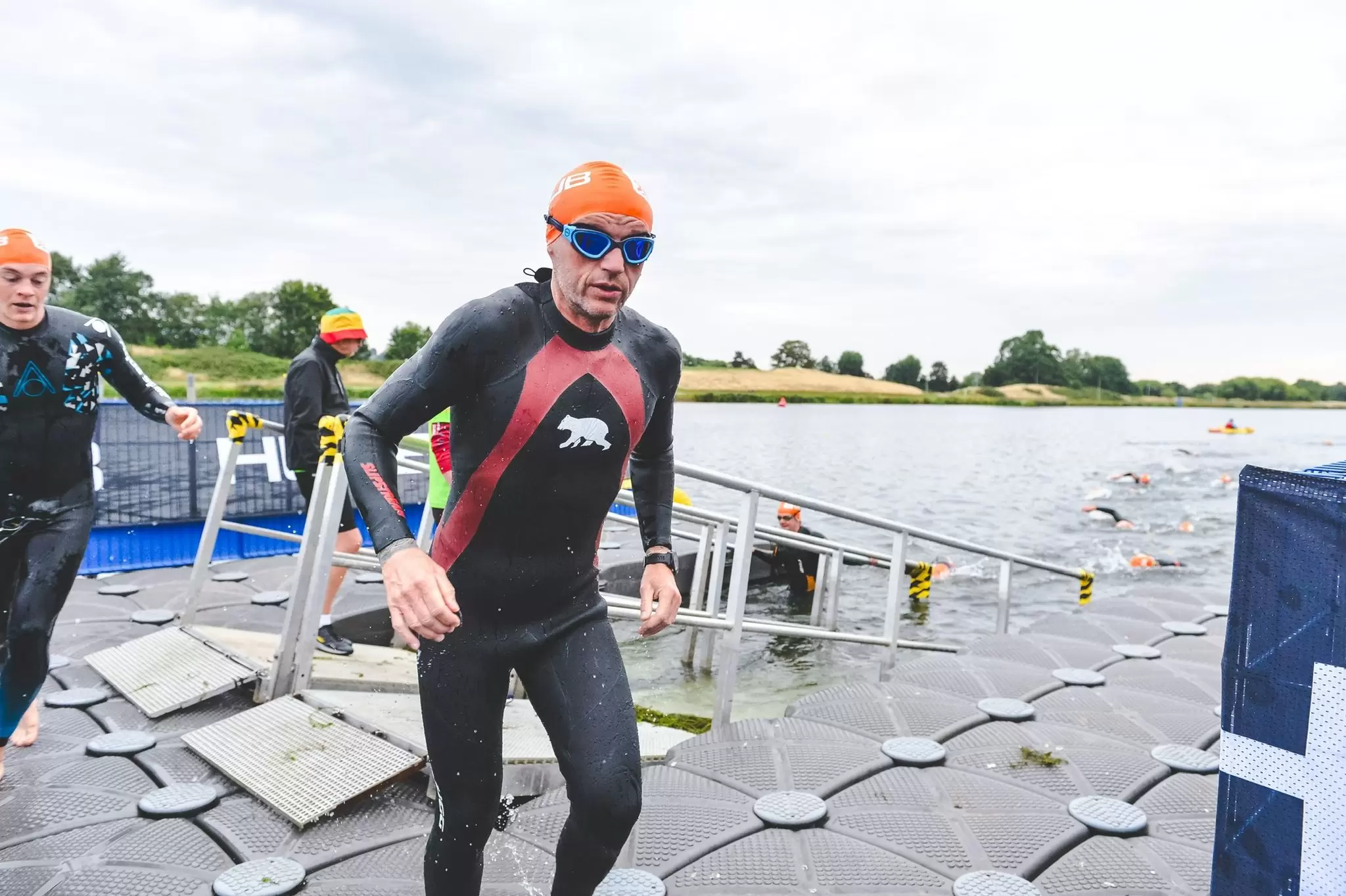
Wetsuit Training: Test and train in your race wetsuit
Aerobic Development: 80% of cycling in Zone 2 heart rate
Hill Repeats: Build strength for varied courses
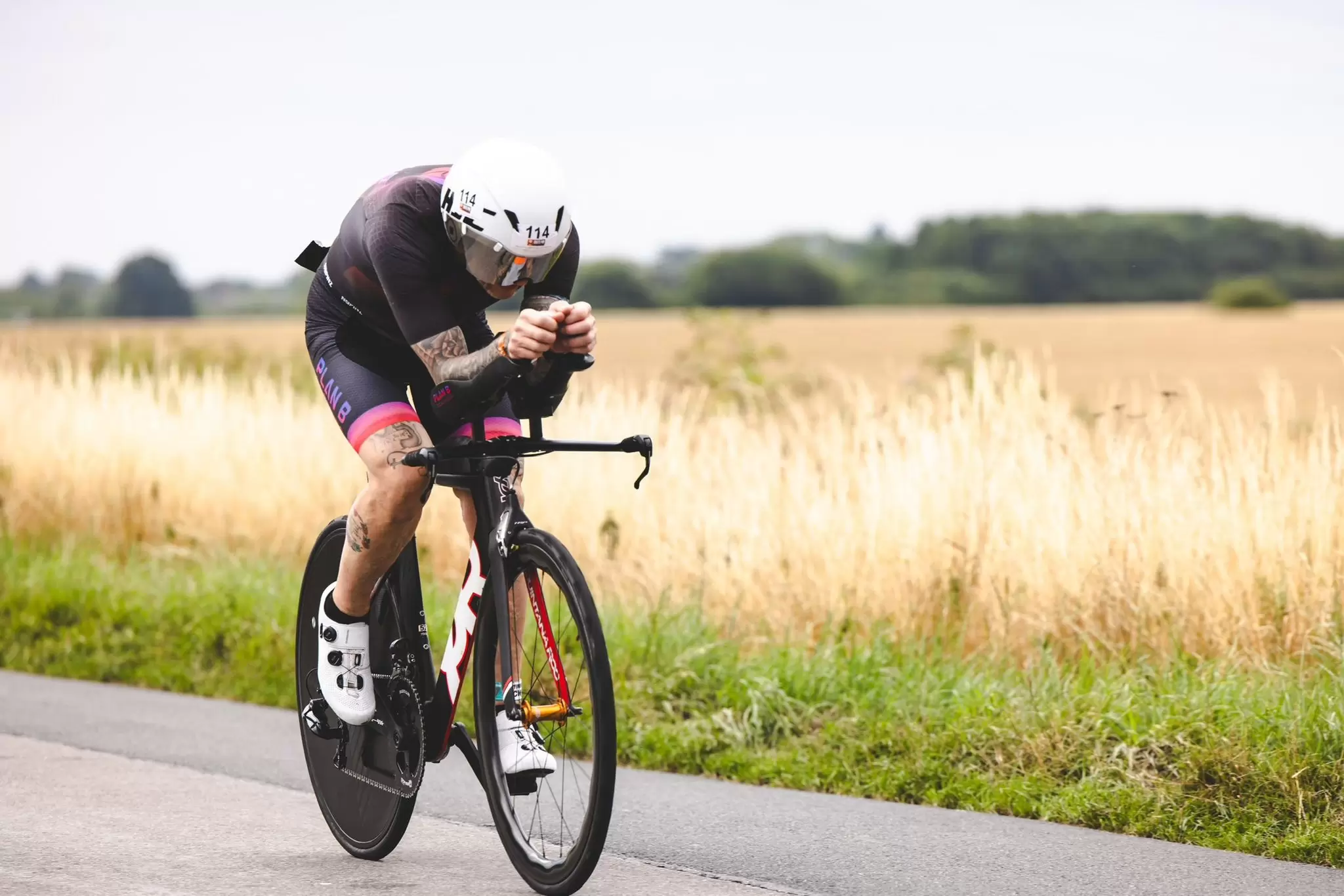
Aero Position: Gradually increase time in race position
Brick Runs: Practice the transition feeling regularly
Off-Bike Runs: Practice running on tired legs
Negative Splits: Train to finish strong
Walking Strategy: Plan walk breaks if needed for your goals
Terrain Specificity: Match training to race course profile
Daily Fueling: Aim for 4-6g carbs/kg body weight during peak training
Workout Nutrition: Practice your race day nutrition strategy
Hydration: Weigh before/after long sessions to gauge sweat loss
Race Week Plan: Dial in carbohydrate loading protocol
Two weekly sessions during base/build phases
Focus: Core stability, single-leg strength, injury prevention
Taper: Reduce to maintenance work weeks 17-20
Sleep: Prioritize 7-9 hours nightly
Nutrition: Post-workout window (30-60 min after training)
Active Recovery: Light swimming, walking, cycling
Tools: Foam rolling, compression gear, massage
Visualization: Practice seeing yourself succeed
Race Rehearsal: Mentally walk through transitions and tough spots
Mantras: Develop positive self-talk phrases
Process Goals: Focus on execution, not just outcome
Swim: 500m time trial (track progress)
Bike: 20-minute FTP test (weeks 4, 8, 12, 16)
Run: 5k time trial (weeks 4, 8, 12, 16)
The Half-Distance Simulation: Week 15 – 2000m swim, 3-hour bike, 90-minute run
Nutrition Dress Rehearsal: Week 14 – full race day nutrition plan
Transition Practice: Weeks 13 & 16 – complete race morning routine
Swimmer’s Shoulder: Rotator cuff strengthening
Cycling Lower Back: Core work and bike fit
Runner’s Knees: Strength training and volume management
Persistent pain that doesn’t fade with rest
Sharp, localized pain (vs. general fatigue)
Pain that alters your movement patterns
Morning stiffness that lasts more than 30 minutes
Bike tune-up and professional fit if needed
Wetsuit purchase/rental
Race day shoes broken in
All nutrition products tested
Race kit tested in training
Backup gear organized
Final gear check
Flat repair kit prepared
Transition bag packed
Begin carbohydrate loading (for appropriate athletes)
Reduce training volume by 60%
Focus on sleep and hydration
Final short, sharp workouts
Check in online if available
Study course maps and rules
Travel to venue if necessary
Practice swim at race venue
Brief bike ride on course sections
Bike and gear check-in
Final short shakeout workouts
Early dinner, layout morning gear
Wake 3+ hours before start
Eat familiar breakfast 2.5 hours out
Set up transition methodically
Warm up appropriately
Swim: Start comfortably, find clean water
T1: Practice in training, have a checklist
Bike: Stick to nutrition plan, ride conservatively for first half
T2: Quick change, mindset shift to running
Run: Start slow, negative split if possible, walk aid stations if needed
Immediate recovery nutrition
Gentle movement/walking
Rehydrate slowly
Celebrate your achievement!
Focus on quality over quantity
Combine workouts (brick sessions)
Maximize weekend training
Consider indoor trainer efficiency
Prioritize completion over time
Include walk breaks in run training
Practice open water swimming
Test all nutrition thoroughly
Increase intensity in specific sessions
Add strength training volume
Include more race-pace work
Fine-tune aerodynamic positioning
Completing an Ironman 70.3 is about more than a single day of racing. It’s about the hundreds of hours of training, the early mornings, the disciplined nutrition, and the mental resilience you build along the way. This 20-week plan provides the structure, but you bring the commitment.
Remember that flexibility is key—listen to your body, adjust when life intervenes, and trust the process. Some days will feel effortless, others will be struggles just to complete. Both are necessary parts of the journey.
Your success won’t be measured solely by your finish time, but by the person you become during those 20 weeks of preparation. The discipline, perseverance, and dedication required will translate to every other area of your life.
Now, the work begins. Commit to the process, embrace the journey, and trust that on race day, your preparation will carry you through every mile. The start line awaits—see you there.
Training Volume Progression Summary:
Weeks 1-4: 6-8 hours/week
Weeks 5-10: 8-12 hours/week
Weeks 11-16: 10-14 hours/week
Weeks 17-20: 4-8 hours/week (taper)
Key Metrics to Track:
Resting heart rate (trend downward indicates fitness improvement)
Training stress balance (avoid chronic fatigue)
Sleep quality and duration
Nutrition adherence
Motivation levels (watch for burnout signs)
Remember: Consistency beats perfection. Missing a single workout matters less than consistently showing up for 80% of your planned training. Your journey to the 70.3 finish line starts not with a massive leap, but with the decision to take that first step—and then the next one, and the next.
Welcome to the world of half-Iron racing. Let’s get to work.

Copyright © PlanB Coaching