support{at}planbcoaching.co.uk


PlanB Coaching > Blog > Uncategorized > The Numbers Lie: Why Your FTP, Run Pace, and 400m Swim Time Won’t Save You When It Gets Dark
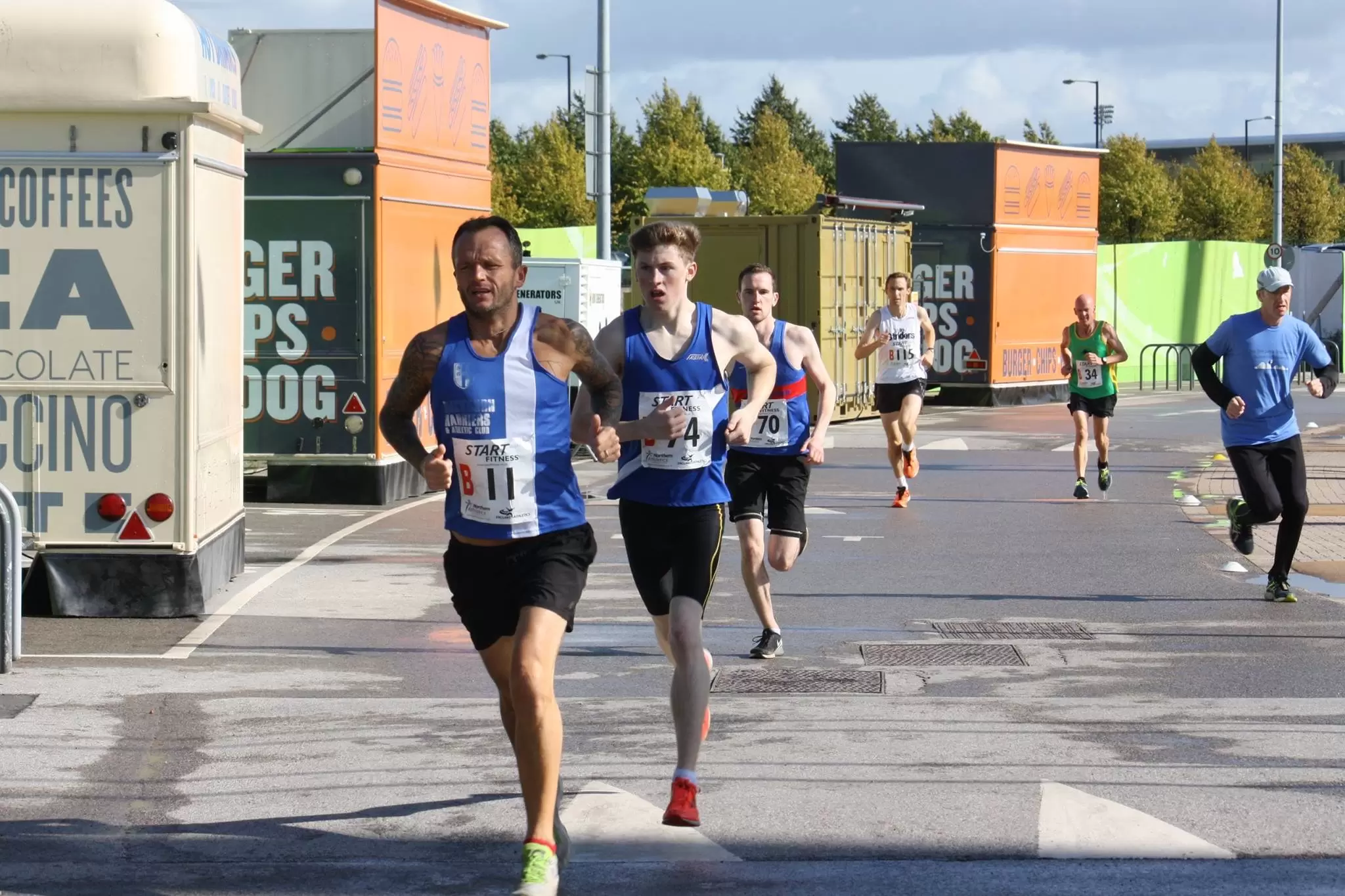
If you have been involved in endurance sport or triathlon for longer than a fortnight, you will have noticed a quiet obsession creeping into your life. It starts innocently enough. You buy a bike computer. You purchase a running watch. You stand on the pool deck squinting at the pace clock. Before you know it, you are living in a world of cold, hard data.
We love data because it is democratic. A watt is a watt in Manchester or Melbourne. A 6:45 mile pace doesn’t care about your feelings. A 1:30 per 100m swim split is a universal truth.
We are told that to improve, we must measure. So we conduct the ritual sacrifices: the 20-minute FTP test on the turbo trainer, gasping for air in a garage that smells of rubber and old sweat. The 5k parkrun time trial where we try to hold a pace that feels like drowning on land. And for the swimmers and triathletes among us, the dreaded 400m time trial—sixteen lengths of a 25m pool, four of a 50m pool, a measured, miserable, magnificent test of your ability to suffer at a controlled pace.
These numbers become our identity. “My FTP is 4.2 watts per kilo.” “My 10k pace is 4 minutes flat.” “My 400m swim time is 6 minutes 10 seconds.” We chase these metrics with religious fervour because they are measurable.
But here is the uncomfortable truth that no power meter, no GPS watch, and no poolside timing board will ever tell you: The mental strength required to actually use those numbers when it matters is utterly, terrifyingly unmeasurable.
You can quantify your physiology. You can put a number on your lactate threshold, your VO2 max, your critical swim speed. But you cannot put a decimal point on the part of your brain that decides whether to stop or keep going.
Let’s talk about why that is, and why the unmeasurable stuff is the only stuff that truly counts.
Let’s start with the measurement triad: Functional Threshold Power (FTP), running pace, and the 400m swim time. On paper, these are the holy grails of fitness testing.
The Bike: FTP
FTP is defined as the highest power you can sustain for approximately one hour. To test it, you usually do a 20-minute all-out effort and take 95% of that number. It is clean. It is scientific. It allows you to train in zones.
The Run: Critical Pace
You lace up your super shoes, hit the track, and run a 5k or 10k at maximum sustainable effort. You get a pace per kilometre. You upload it to Strava. It becomes your “threshold pace.”
The Swim: The 400m Test
Forget the 100m sprint. The 400m is where the truth lives. It is too long to be a pure sprint and too short to be a gentle distance swim. It sits in the painful no-man’s-land where your aerobic system is screaming for oxygen, your shoulders are filling with lactate, and your brain has six full minutes to talk itself into quitting. A good 400m time trial requires a pace that feels horribly uncomfortable from the first 100m and becomes utterly unbearable by the 300m mark. The final 100m is a negotiation between your body’s limit and your will’s refusal.
We treat these numbers as the finish line. We think, “If I can just hit 300w on the bike for 20 minutes, I will be a good cyclist.” Or, *“If I can hold 4:00/km for a half marathon, I will be happy.”* Or, “If I can break six minutes for 400m, I will finally be a proper swimmer.”
But here is the catch. These tests are performed in sterile environments. Your FTP test is done on a static turbo trainer indoors, with a fan blowing on you, a nearby TV, and the absolute certainty that if you blow up, you can simply unclip and walk to the fridge. Your 400m swim test is done in a quiet lane, with a predictable wall every 25m, and no one trying to kick you in the face.
That is not racing. That is not even close to racing.
In cycling, there is a lovely euphemism: “The window drops.” On a climb during a road race, or on the fifth lap of a cyclocross event, the group accelerates. To stay attached, you have to push 420w. Your FTP is 320w.
The numbers tell you this is impossible. Physiology says you will seize. The power meter on your handlebars is screaming a red number. But here is where the mental game begins.
The true athlete does not look at the number and give up. They look at the number, acknowledge the pain, and then they negotiate.
“Just fifty more metres at this wattage.”
“Just to the next lamppost.”
“Just to where the gradient eases.”
No power meter can measure the internal monologue that wins that negotiation. No algorithm can predict whether you will fold at the first spike of lactate or whether you will grit your teeth so hard you think your molars might crack.
I see it all the time on the local chaingang. There are lads with insane 20-minute power numbers who get dropped the second the road goes uphill because their brain throws the towel in at 8/10 pain. And there are scruffy old men in faded jerseys whose FTP is objectively average, but who you cannot shake. They sit on your wheel, silently suffering, and then they attack you on the final rise because they have been to a dark place before and they know the way out.
You can measure an FTP of 300w. You cannot measure the will to hold 310w for thirty seconds when your legs are screaming mutiny.
Running is arguably worse, because the feedback loop is immediate and cruel. You set your watch to show your current pace. You want to hold 4:20/km for a marathon. For the first 10k, it feels conversational. By 30k, holding 4:20 feels like sprinting. By 38k, your watch says you are doing 4:20, but your body feels like it is moving through treacle.
This is the gap between real pace and perceived pace. And perceived pace is entirely a construct of your mental state.
I remember a specific marathon in the Lake District. The weather turned. A headwind picked up on an exposed section by the water. My watch said I was running 4:30 pace—ten seconds slower than target. A purely logical, data-driven brain might have panicked. “Push harder,” it would say. “Get back to 4:20.”
But that would have been suicide. The wind was stealing energy. The unmeasurable part of my brain—the part built on years of bad races, blown legs, and stubborn pride—whispered: “Ease off. Trust the effort, not the number. Save something for the last 10k.”
Trusting the effort rather than the number is the highest form of endurance wisdom. But you cannot learn it from a heart rate strap. You cannot download it from TrainingPeaks. You learn it by falling apart spectacularly in a race, walking the last three miles, and swearing you will never let your ego overrule your instinct again.
We call it “pacing.” But true pacing isn’t maths. True pacing is a conversation between your rational brain (which knows your threshold pace) and your limbic system (which is screaming, “Stop, this hurts, there is a nice pub over there”). The winner is the one who can keep talking calmly while the emotional side is having a tantrum.
Let us now discuss the 400m swim time trial. Non-swimmers think this is a gentle distance. Swimmers know it is one of the most psychologically revealing tests in all of sport.
The first 100m feels manageable. You are smooth, long, breathing every three strokes, pretending this is going to be easy. By 200m, the shoulders begin to ache. The lungs start to work properly. This is where the unwary athlete goes out too hard and pays the price.
The third 100m—from 200m to 300m—is where the demons live. Your stroke rate drops. Your legs sink. Every turn feels like an effort. You glance at the pace clock and see a number that is two seconds slower than you want, and your brain whispers, “Just stop at the next wall. Say you felt a twinge. No one will know.”
And then there is the final 100m. This is not a sprint. This is survival. In a 400m test, you have no explosive finish left. The last 100m is about holding on. It is about refusing to let your pace slip. It is about counting strokes—one, two, three, breathe—over and over, like a mantra, while your triceps scream and your lungs burn with the specific, metallic taste of maximum effort.
Here is the unmeasurable part: your ability to hold technique under fatigue.
When a swimmer fatigues during a 400m test, the first thing to go is not their fitness; it is their form. They drop their elbow. They cross over the midline. They lift their head to breathe. They shorten their stroke. All of this makes them slower, which makes them panic, which makes them even more fatigued.
The swimmer with the stronger mental game does not try to swim harder. They try to swim smarter. They count strokes per length. They focus on a high elbow. They tell themselves, “Exhale fully into the water. Relax the hands. Rotate the hips. Drive the pull all the way to the thigh.”
You can measure their 400m time down to the tenth of a second. But you cannot measure the internal cueing system that got them from 300m to 400m without falling apart. You cannot measure the moment at 350m when they decided, “No, I will not quit,” even though every muscle fibre was asking for permission to stop.
I watched a junior swimmer once do a 400m freestyle time trial. She had the aerobic engine of a freight train. But every time she raced, she would tighten up at the 300m mark. Her split for the third 100m would drop by eight seconds—not because she ran out of fitness, but because she ran out of nerve. She was afraid of the pain in the last 100m. She was hesitating off the wall, gliding too long, afraid to engage her catch.
You cannot fix that with more yardage. You cannot fix that with a paddles and pull buoy. You fix it by teaching her to embrace the hurt. To lean into the burn. To trust that her body can survive six minutes of controlled hell.
That lesson takes years. And it leaves no trace in a training log.
So if we accept that FTP, run pace, and 400m swim time are just the entry ticket—the bare minimum requirement to start the conversation—what is the actual mental toolkit required to convert those numbers into performance?
I believe it is a constellation of unquantifiable traits. Let’s name a few.
Suffering is a skill. In the UK, we are quite good at stoicism, but endurance sport takes it to another level. The ability to feel pain—real, deep, muscular, acid-bath pain—and not change your facial expression, not groan, not reach for the brakes, is a superpower. In a 400m swim test, this is the difference between the swimmer who lifts their head and gasps at the 350m turn, and the swimmer who keeps their crown down, eyes on the black line, and simply continues.
You cannot learn this from a coach. You learn it by deliberately putting yourself in uncomfortable situations on a Tuesday night when you are tired, and you have no reason to push hard, but you do it anyway.
We all have good days and bad days. The person with high mental strength knows how to read their own internal forecast. On a day when the legs feel like wood on the bike, they don’t chase an FTP PB. They adjust. On a day when the shoulders feel heavy in the pool, they do not attempt a 400m PB. They tell themselves, “Today is a grit day. Today we just hold pace and practice technique.”
Conversely, on a day when they feel electric, they know not to waste it by being cautious.
Elite endurance athletes have a fascinating ability to forget pain. Two hours after a crushing 400m swim test that left them lying on the deck, retching into a bucket, they are already talking about the next one. Their brain has a selective filter that archives the agony and remembers only the glory.
This is not naivety. It is a trained response. You can choose to relive the moment you nearly stopped at the 300m wall, or you can choose to remember the feeling of touching the pad at 400m and seeing a new PB. The mentally strong choose the latter.
When you are suffering, it is very easy to look for external excuses. “The pool is too warm.” “The lane is choppy.” “The pace clock is hard to read.” “Someone is splashing me.”
The strongest athletes have an internal locus of control. They do not care about the temperature of the water. They care about their own stroke count. They do not care if the lane is crowded. They care about their own split at the 200m turn. This shift in perspective is worth far more than ten seconds on a 400m swim time, but you cannot bill for it.
Here is a controversial thought: sometimes, we obsess over measuring fitness because we are afraid to look at the mental side.
It is easy to buy a power meter. It is a transaction. You spend £500, you bolt it to your bike, and suddenly you have a numerical target for every single ride. It gives you the illusion of control. It is similarly easy to jump in the pool, do a 400m for time, and have a concrete number to plug into your training zones.
Working on your mental strength is messy. You cannot buy a grit meter. There is no app for “perseverance in the face of existential fatigue.” You have to go to the pool on a cold January morning, swim 400m repeats until you want to vomit, and then see if you can do one more with perfect technique.
That is terrifying. Because if you fail a physical test, you can blame the choppy water, the bad air quality in the pool hall, the sleepless night. If you fail a mental test—if you quit on that final 100m—you have to look in the mirror and admit that the weakness was inside you all along.
But here is the liberation: mental weakness is not a fixed trait. It is a muscle. It is the most trainable muscle in your entire body. It just doesn’t respond to linear periodisation. It responds to experience.
Since we cannot quantify it, how on earth do we train it? I have three suggestions that do not involve a power meter, a GPS watch, or a pace clock.
In your next long run or ride, do not check your numbers for the first half. Ride entirely by feel. In the pool, try a 400m swim where you do not look at the pace clock until you have finished 200m. Then, for the second half, the goal is to make the second 200m faster or more technically sound than the first half, regardless of fatigue.
This teaches you that your body always has reserves you haven’t touched. It teaches you that “empty” is often a lie your brain tells you to protect you from discomfort.
When you want to quit—when you are at 350m of a 400m swim, or 95k of a 100k bike ride—agree to a contract with yourself. Do not quit immediately. Wait ten seconds. Count them out. One, two, three…
In those ten seconds, take a breath. Adjust your posture. In the pool, focus on a single technical cue—high elbow, exhale fully, finish the pull. Almost always, the urge to quit passes. It is a wave. Let it wash over you. If you quit at the peak of the wave, you will always wonder if you could have held on.
This sounds woefully positive, but bear with me. When you are deep in the pain cave—whether on the bike, on the run, or at the 300m mark of a 400m swim—start listing things you are grateful for. “I am grateful for legs that push the pedals. I am grateful for lungs that fill with air. I am grateful for shoulders that can pull water. I am grateful that I chose to do this, rather than having it forced upon me.”
It is impossible to feel sorry for yourself and grateful at the same time. Gratitude changes the chemical soup in your brain. It raises your pain tolerance. Try it during your next 400m swim test. It is free, and it works better than any energy gel.
I want you to picture two athletes.
Athlete A has an FTP of 350w, a 10k pace of 3:30/km, and a 400m swim time of 5 minutes 40 seconds (1:25/100m pace). They are a physical specimen. But they panic when the race plan goes wrong. They look at their bike computer every three seconds. In the pool, if their split at 200m is off target, they either panic and sprint (and die in the last 100m) or they ease off and accept a slow time.
Athlete B has an FTP of 310w, a 10k pace of 3:45/km, and a 400m swim time of 6 minutes 20 seconds (1:35/100m pace). Objectively, they are less “fit.” But they have raced a hundred times. They know what their red line looks like and they are not afraid to dance on it. In the pool, they know how to negative split a 400m. They know that the third 100m is the mental danger zone, and they have a plan for it. When their shoulders burn, they think, “Good. That means I’m engaging the lats.”
On a perfect day, Athlete A wins. But races are rarely perfect.
On a windy, rainy, horrible Tuesday evening criterium, or a choppy open-water 1500m swim, or a rolling hill marathon with three thousand feet of elevation? My money is on Athlete B every single time.
Because Athlete B has something you cannot download from Garmin Connect or measure on a poolside pace clock.
They have grit.
They have experience.
They have the quiet, unshakeable knowledge that they have suffered worse before, and they are still here.
So by all means, test your FTP. Go to the running track and chase that 5k PB. Jump in the pool and see if you can squeeze a few seconds off your 400m time. These are useful metrics. They are the scaffolding upon which you build your fitness.
But do not mistake the scaffolding for the building. Do not mistake the number on the screen for the person on the bike, or the split on the clock for the swimmer on the wall.
The real race is not watts per kilo versus watts per kilo. It is not 1:25/100m versus 1:35/100m. It is your mind versus the voice that tells you to stop. And that voice is the only opponent you will ever truly face.
Go chase your numbers. But when the session gets hard, when the rain is lashing down, when your lungs are on fire and every fibre of your being wants to pack it in—remember that the number doesn’t matter.
What matters is that you stay in the fight.
And no algorithm, and no pace clock, will ever be able to measure that.
🦆 If it walks like a 🦆 – Its generally a 🦆
Copyright © PlanB Coaching