support{at}planbcoaching.co.uk


PlanB Coaching > Blog > Uncategorized > The Secrets to a Stronger Run Off the Bike in Triathlons
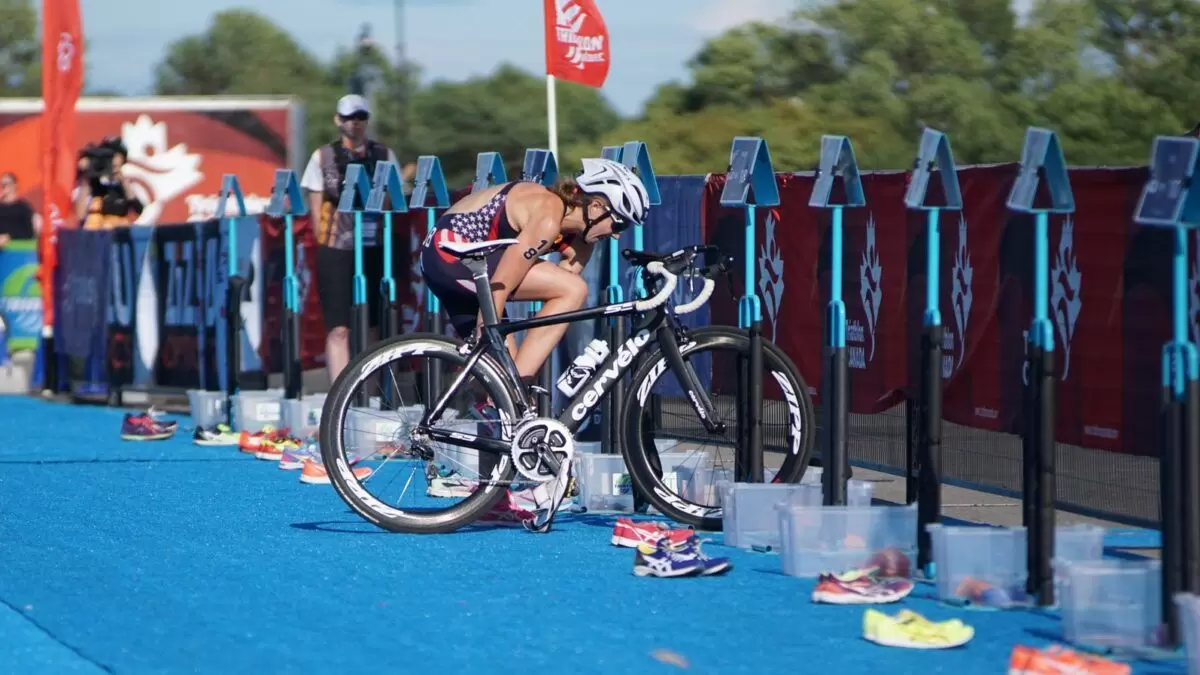
We have all seen it. An athlete flies out of T2 looking like a caffeinated gazelle, only to crumble into a death march shuffle by mile two of the run. Conversely, we have seen the “steady Eddie” who rolls into transition looking tired, yet somehow drops a negative split run that passes half the field.
If you have been in this sport for more than five minutes, you know the golden rule: Triathlons are not won on the bike, but they can certainly be lost there. However, the real secret is a bit more nuanced. The race is won by the athlete who can run the closest to their open 10k or half-marathon pace after riding hard.
Welcome to the art and science of the “brick” — specifically, the run off the bike (ROTB). For years, amateurs have treated the brick workout as a necessary evil. “Let me ride 40 miles, then hobble for 10 minutes just to feel the pain.” That is not training; that is hazing.
If you want a stronger, faster, and more resilient run off the bike, you need to stop guessing and start training with intent. In this 3,000-word deep dive, we are unlocking the physiological secrets, the pacing paradoxes, and the specific workout formulas that separate the podium from the port-a-potty.
Before we fix the problem, we must understand the enemy. The sensation of “jelly legs” isn’t just in your head; it is a perfect storm of neuromuscular confusion, blood shunting, and metabolic fatigue.
When you cycle, you are in a fixed position. Your hip flexors are shortened, your glutes are firing eccentrically, and your quadriceps are doing the heavy lifting of the pedal stroke. You become an efficient, spinning machine.
Then you dismount. Suddenly, you ask those same quads to do something completely different: absorb impact. You ask your shortened hip flexors to extend. You ask your glutes to switch from rotating the crank to stabilizing your pelvis against gravity. The nervous system panics. It has spent 2–5 hours perfecting the cycling motor pattern. It has to reboot instantly for running. That lag time is “jelly legs.”
On the bike, your cardiovascular system loves you. You are sitting. Blood flows easily to the working muscles. When you stand up to run, gravity pulls that blood into your lower extremities. Your heart rate spikes not because you are working harder, but because your heart suddenly has to pump against gravity to re-perfuse those now-heavy legs.
If you rode at 85% of your FTP (Functional Threshold Power), you produced a steady stream of lactate. On the bike, your muscles cleared it fine. But the moment you stop pedaling and start running, the muscles that used to clear lactate (your aerobic slow-twitch fibers) are now being used for impact absorption. Clearance stops. Accumulation starts. Burn sets in.
The Secret: You cannot remove these physiological realities. But you can train your body to transition faster. The goal of your ROTB training is to reduce the “neurological reboot” time from 15 minutes to 2 minutes.
This is the hardest pill for Type qA triathletes to swallow. You look at your bike computer. You feel fresh. You think, “If I push an extra 10 watts on the bike, I can bank 3 minutes. I’ll just ‘mentally tough it out’ on the run.”
Math, biology, and race results disagree.
Research in Medicine & Science in Sports & Exercise consistently shows that for every 5% increase in bike intensity above your optimal threshold, you lose 10-15% of your run performance. The “banked” time on the bike is lost at a ratio of 1:3 on the run. Push 2 minutes harder on the bike? You just lost 6 minutes on the run.
On the bike, a 7/10 RPE feels great. The wind is cooling you. You are seated. On the run, a 7/10 RPE feels like death. Your ROTB pace should feel laughably easy for the first 1.5 miles. If you start the run feeling like you are racing, you are already in the red zone.
The Secret Strategy: The 80/20 Bike Split
For a half-ironman or Olympic distance, aim for a “negative bike split.” Ride the first half at 75-78% of your FTP. Ride the second half at 80-82%. Why? You preserve your neuromuscular system. You enter T2 with your glycogen stores at 60% rather than 30%. You allow your liver to keep producing glucose without dumping stress hormones (cortisol) that shut down digestion and muscle repair.
Try this in training: Do a 60-minute trainer ride at Ironman effort (Zone 2/3), then run 5k. Note your pace. Next week, do the same ride at 15 watts higher. Run the same 5k. I guarantee the second run will be 30-45 seconds per mile slower. The data doesn’t lie.
Most triathletes do bricks incorrectly. They ride hard, then run slow. Or they ride easy, then run hard. Neither replicates race day. We need specificity.
Here is your new brick library. Do one per week, rotating through these three types.
Goal: Reduce the “jelly leg” duration.
Length: 45 minutes total.
Bike: 30 minutes at Z2 (easy conversational pace).
Transition (T2 practice): 60 seconds. Bike shoes off. Run shoes on. No sitting.
Run: 15 minutes at your goal half marathon pace (not your goal tri run pace—faster).
The Secret: Do this without stopping the watch. The goal is to hit your target run pace within 90 seconds of dismounting. If your first 400m split is slow, repeat this workout until it isn’t.
Goal: Teach your legs to run fast on tired quads.
Length: 2.5 hours.
Bike: 90 minutes. Build from Z2 to Z3 (Sweet Spot). Finish with 3 x 3-minute efforts at Olympic race pace.
Run: 40 minutes. But here is the magic: Descending pace.
Minutes 0-10: Z1 (recovery jog, even if you have to walk).
Minutes 10-20: Z2 (marathon pace).
Minutes 20-30: Z3 (half ironman run pace).
Minutes 30-40: Z4 (Olympic run pace).
Why it works: Most people start too fast. This teaches you patience. You learn that the first 10 minutes are about survival. The last 10 minutes are about strength. By the time you hit Z4, your legs have remembered how to run.
Goal: Simulate the back half of a 70.3 or Full Ironman.
Length: 3–5 hours.
Bike: 3+ hours at Ironman specific power (Z2).
Transition: Take 5 minutes. Change socks. Eat a gel. Drink water. Simulate a real T2.
Run: 60–90 minutes. Pace: Ironman goal run pace + 15 seconds.
The Secret: This is not about speed. It is about form. When you are exhausted, does your cadence drop? Does your posture collapse? Film yourself. Watch for hip drop. The secret to a strong run late in a long race is keeping your hips forward and your head over your ankles.
If you fix only one thing today, fix your run cadence off the bike.
On the bike, you spin at 85-95 RPM. Your stride length on the run is naturally long. When you get off the bike, your nervous system is still in “long lever” mode. You over-stride. Your heel strikes the ground in front of your center of mass. This acts as a braking mechanism. Every step is a mini car crash.
Elite triathletes run at 180-190 steps per minute (spm) off the bike. Amateurs run at 160-170 spm.
How to fix it: Download a metronome app (or use a watch with cadence). Set it to 180bpm. On your next brick, match your foot strikes to the beat.
The feeling: It will feel like a silly shuffle at first. You will feel like a cartoon character. But notice your quads. They will burn less. Your calves will engage. You shift the load from your dead bike muscles (quads) to your fresh run muscles (hamstrings/calves).
Drill: Off the bike, do 5 minutes of “butt kicks” and “high knees” immediately after racking your bike. This forces your nervous system to shorten your stride length before you even leave transition.
You cannot run well off the bike if your core collapses. The bike puts your spine in flexion. The run requires spinal stability. If your core is weak, your hips drop, your knees cave in, and your run pace plummets.
This little muscle on the side of your hip is responsible for keeping your pelvis level. When it fails, you get “Trendelenburg gait” (the waddle). This adds seconds per mile and leads to IT band syndrome.
The Secret Workout (15 minutes, 2x per week):
Do this after your brick runs, not before.
Single-Leg Romanian Deadlift (RDL): 3×8 per leg. (No weight if you are new. Focus on hip hinge).
Lateral Band Walks: Monster walks for 3 minutes. Burn those glute meds.
Plank with Leg Lift: 3×30 seconds. (This mimics the instability of running on tired legs).
Copenhagen Adductor Plank: 3×15 seconds per side. (This prevents the “knee cave” that happens at mile 22 of an Ironman).
Strong glutes and a stiff core mean you don’t waste energy stabilizing. Every watt of power from your run stride goes forward, not side-to-side. When the bike ride has destroyed your quadriceps, your glutes and core take over as the “plan B” engine.
You can have the perfect legs and the perfect pacing, but if your blood sugar is a roller coaster, your run will explode.
During the bike, you burn a mix of fat and carbs. As you transition to the run, your body wants to burn more carbs because running is higher impact and higher intensity. If you arrive in T2 with low blood glucose, your body will release cortisol and adrenaline to force the liver to make sugar. Those stress hormones increase your heart rate by 10-15bpm for no mechanical gain.
15 minutes before T2: Take your last bike gel. Caffeine optional.
In T2: Do not eat a full gel here. Your gut blood flow is still redirected to your legs. Instead, take a swig of water and a salt stick or electrolyte capsule. The sodium helps with fluid absorption for the sweat you are about to produce.
First 10 minutes of the run: Take small sips of water or a very diluted sports drink. Do not slam a gel. If you feel nauseous, you waited too long to eat on the bike.
For long course racing (70.3/Full), flat coke in T2 is the secret weapon. Why? The sugar (dextrose/sucrose) is a 1:1 glucose/fructose ratio that absorbs through a different gut transporter than your bike gels. It provides a rapid “floor” of blood sugar without the viscosity of a gel. Plus, the caffeine constricts blood vessels in the head (reducing perceived effort) while dilating vessels in the legs (increasing flow). Take 4-6 oz as you rack your bike.
When you are 2 miles into the run and your legs feel like tree stumps, your brain will scream, “Stop. Walk. This hurts.” You need a pre-written script.
Do not say: “My legs are dead.”
Say: “My legs are recalibrating.”
Do not say: “I have 10 miles left.”
Say: “I just have to run to that next aid station.”
Make a deal with yourself. For the first 10 minutes of the run off the bike, you are not allowed to look at your pace. You are only allowed to look at your cadence (180) and your breathing (rhythmic). You are simply “shaking out the bike.”
After 10 minutes, re-assess. 90% of the time, the legs feel normal again. If they don’t, you paced the bike wrong—use that as data for next race.
Choose a three-word mantra for the hills.
“Light and quick.”
“Hips forward, relax.”
“Strong, steady, smooth.”
When the burn sets in, repeat this. It gives your frontal lobe a job other than “feel pain.”
This is the most common amateur mistake. You do a brutal brick workout 5 days before the race. You think you are “sharpening.” In reality, you are creating residual fatigue that will flatten your run.
Your last hard brick workout should be 10-12 days out from an A-prize race.
10 days out: Workout B (Descending Run).
7 days out: Short brick. 30 min bike easy + 10 min run at race pace. Just to feel the transition.
3 days out: Nothing. Swim only. Walk. Stretch.
7 days before the race, do an open 5k run (no bike before). If you run a 20:00 open 5k, you should run a 21:30 off the bike in an Olympic race. If your brick runs are slower than that, your bike pacing is off or your brick training is too erratic.
There is no single magic pill for a stronger run off the bike. There is no workout that instantly turns you into Gustav Iden or Lucy Charles-Barclay. The secret—the real secret—is the compounding effect of 1% improvements.
You fix your bike pacing (saving 3 minutes of run pain).
You train your cadence (saving 2 minutes over 10k).
You strengthen your glute med (saving 1 minute of wobble).
You nail your T2 nutrition (saving 5bpm of heart rate).
You practice the 10-minute mental contract (preventing a 5-minute walk break).
Add that up. You just took 10 minutes off your run split.
Next time you rack your bike, do not think about the pain. Think about the process. The first mile is a lie. Do not trust it. Do not panic. Keep your cadence high, your hips forward, and your nutrition on schedule. The podium doesn’t go to the fastest biker. It goes to the athlete who runs best when their legs are screaming for mercy.
Now go brick. But do it smartly.
Copyright © PlanB Coaching