support{at}planbcoaching.co.uk


PlanB Coaching > Blog > Uncategorized > The True Cost of IRONMAN. No such thing as a FREE Gift.

“Beware of strangers bearing gifts” This was my first employers favourite saying. This can be applied to many areas of life.
With that said, we move to triathlon so let’s talk about the elephant in the transition area. IRONMAN races have become astronomically expensive. We’re talking entry fees that have ballooned by 70% in just a few years, with some athletes forking out nearly £1,500 just for the privilege of suffering for 140.6 miles.
And yet, every race weekend, you’ll see them. The influencers. Fresh off a sponsored flight, decked out in gear they didn’t pay for with a grey fluffy mic piece in hand and a partner shoving a camera in anybodies face who gets in their way.
So let’s connect the dots. Why are you paying £850 for a race bag and some goodies? Maybe, just maybe, it’s because the business model has shifted. You aren’t just paying for your race. You’re subsidising the marketing budget.
Let’s look at the numbers, because they are genuinely staggering. For the Australian athlete quoted in a recent Triathlete article, entering Kona costs close to £1,500. In the UK, a full IRONMAN is now £850 for age-groupers, while 70.3’s aren’t far behind at £540. That’s just the entry fee.
Let’s put that in perspective. One forum user crunched the numbers and found that a full IRONMAN plus Kona qualification, including flights, accommodation, and car hire, would leave them “unlikely to see much change out of £8,500”. Another pointed out that the entry fee for IM Austria in 2009 was £300. Adjusted for inflation, that should be around £440 today. Instead, it’s closer to £850. The race hasn’t gotten better. It’s just gotten more expensive.
Add in travel, accommodation (which spikes dramatically in host cities during race week), bike shipping, and the thousands of pounds in gear and nutrition required to even get to the start line. One detailed breakdown of triathlon costs lists everything from a £15 pump to a £15,000 bike, with wheels alone potentially costing £2,500. We’re talking about a hobby that costs as much as a used car.
And what do you get for that premium? According to long-time athletes, “a race bag, basically the same as any other race, just double the price because it’s a ‘world championship'”. The product hasn’t gotten better. The price just went up.
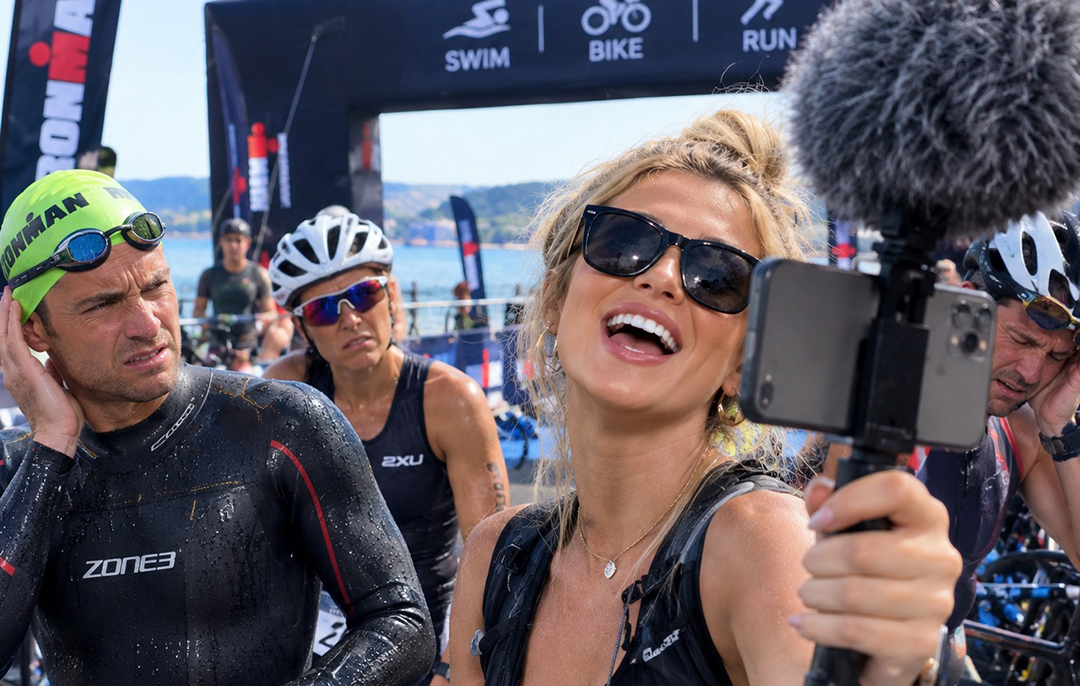
Here’s where it gets frustrating. While age groupers are pinching pennies and skipping races because they can’t justify the cost, IRONMAN has been busy rolling out the red carpet for influencers.
This isn’t just about a few people getting a free entry. It’s about the optics and the economics. If IRONMAN is footing the bill for influencer entries, travel, and accommodation, or providing them with free slots that could have been sold to paying customers, that cost has to be recouped somewhere. And it’s recouped from you.
Every complimentary slot given to someone with a large Instagram following is a slot that wasn’t sold at full price. The math is simple. To maintain revenue targets, the price per paying athlete goes up.
It’s worth noting that IRONMAN does have official programmes that provide complimentary entries. The IRONMAN Foundation’s TEAM IMF programme gives athletes a free race entry in exchange for fundraising for the community fund. That’s a legitimate charitable model. But the influencer economy operates differently. When a fitness personality with a million followers gets a free slot and a front row start, they’re not raising money for charity. They’re producing content. And you’re paying for it.
The defence of this practice usually sounds something like: “But influencers bring new people into the sport! They grow the brand!”
Here’s the problem. The people they bring in are often not the ones who will stick around and pay £850 a year to race. They bring in an audience looking for a spectacle, not a lifestyle. Meanwhile, the core demographic, the age grouper who has been racing for a decade or two, who buys the gear, who travels to multiple races a year, is getting priced out.
There’s evidence that the growth strategy isn’t even working. Independent iron distance races, which offer the same challenge at a fraction of the cost, have been disappearing across the United States. Race directors who tried to provide an affordable alternative found that athletes simply weren’t interested. As one race director put it: “People forgot, and they’re still chasing that M dot on their calf”. The brand loyalty is so strong that cheaper alternatives can’t compete, which gives IRONMAN zero incentive to lower prices.
Consider the comparison to other race organisations. The Professional Triathletes Organisation (PTO) and Challenge Family allow professional athletes to compete for free based on ranking. The PTO’s T100 series distributes more than £6 million in athlete compensation, with race purses of £220,000 and payouts extending down to 20th place. IRONMAN, by contrast, charges pros a £1,200 membership fee just for the privilege of racing.
If the pros are paying, and the age groupers are paying more than ever, where is the money going? It’s certainly not going into better race experiences or lower fees. It’s going into an aggressive marketing machine designed to keep the brand in the spotlight. A spotlight that influencers are only too happy to occupy.
To understand why IRONMAN prices keep climbing, you have to look at who owns it. IRONMAN is not a non profit dedicated to growing the sport. It’s a private equity asset.
The World Triathlon Corporation (which owns the IRONMAN brand) was purchased by Providence Equity Securities for £65 million in 2008. In 2015, it was sold to Chinese conglomerate Dalian Wanda Group for £500 million, with the company valued at roughly £700 million. In 2020, Advance Publications acquired The IRONMAN Group, with Orkila Capital as a co investor.
Private equity firms have a simple mandate: maximise return on investment. They typically operate on a four to seven year exit plan, aiming for double digit percentage returns. How do you achieve that with a race series? You raise prices. You cut costs. You expand into new markets. You don’t lower entry fees out of goodwill.
This isn’t a conspiracy theory. It’s just how the business works. When you pay £850 for an IRONMAN entry, a portion of that goes towards servicing the debt and generating returns for the owners. That’s not inherently evil, but it does explain why prices keep going up even when athletes are screaming that they can’t afford it.
The frustrating part is that triathlon doesn’t have to be this way. Grassroots races exist. Independent half distance events put on by local clubs offer the same distance, often better aid stations, and a fraction of the cost. Challenge Roth, for example, offers a refund of your entry fee if you go under nine hours, a model that rewards performance rather than penalising participation.
But IRONMAN has bought up many of the independent races, leaving athletes with fewer choices. They know that for many, the “M-dot” tattoo and the Kona dream are worth the price of admission. They are exploiting that loyalty.
There’s also a generational shift happening. Younger athletes entering the sport don’t have the same reverence for Kona that older generations do. As one coach observed, athletes in their 20s “don’t even know who Mark Allen or Dave Scott are.” All they want is to finish an Ironman. It’s a bucket list thing for them. If that trend continues, IRONMAN’s pricing power may eventually erode. But by then, how many longtime athletes will have been priced out entirely?
If you’re tired of paying premium prices so that someone with a ring light can get a free race entry and a front-row start, you have options.
You can race independent events. You can support local race directors. You can organise your own grassroots triathlon. People have done it with nothing more than a lake, some shopping bags for buoys, and a potluck finish line.
You can also push back publicly. Ask IRONMAN why entry fees have outpaced inflation by such a wide margin. Ask them how many complimentary entries are given to influencers versus how many are given to age groupers who have qualified through years of hard work. Ask them what percentage of your entry fee goes towards marketing versus race day experience.
Or you can continue to pay. But if you do, don’t be surprised when next year’s entry fee is higher and the influencer wave is even bigger. The machine only stops if we stop feeding it.
Copyright © PlanB Coaching