support{at}planbcoaching.co.uk


PlanB Coaching > Blog > Information > The Ultimate Guide to 80/20 Triathlon Training
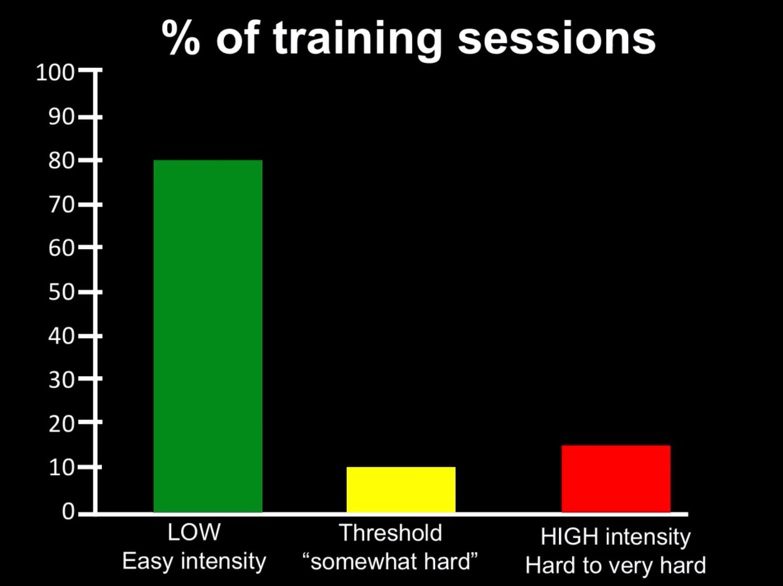
Triathlon training is demanding. Balancing swimming, cycling, and running—while also incorporating strength work, recovery, and nutrition—can be overwhelming. Many athletes fall into the trap of thinking that more intensity equals better results. But what if the key to peak performance wasn’t pushing harder in every session, but training smarter?
Enter 80/20 triathlon training, a scientifically backed approach that has revolutionised endurance sports. Popularized by coach Matt Fitzgerald in his book *80/20 Running* and later expanded to triathlon, this method is based on a simple principle:
🔹 80% of training should be at low intensity
🔹 20% of training should be at moderate to high intensity

This balance optimizes endurance, reduces injury risk, and leads to faster race times. In this comprehensive guide, we’ll break down:
The science behind 80/20 training
Why it works so well for triathletes
How to apply it to swim, bike, and run workouts
Common mistakes to avoid
Real-world success stories
By the end, you’ll understand why 80/20 triathlon training is one of the most effective methods for athletes of all levels.
The 80/20 rule (also known as the Pareto Principle) suggests that 80% of results come from 20% of efforts. While this concept applies to business and economics, endurance sports research shows a similar pattern:
Elite athletes spend ~80% of training at low intensity (Zone 1-2)
Only ~20% is high intensity (Zone 4-5)
Studies on Olympic endurance athletes (including triathletes, runners, and cyclists) confirm this distribution. The key takeaway? Going hard all the time is counterproductive.
Many triathletes believe they need to push hard in every session to improve. But the body adapts best when stress is properly balanced. Here’s why 80/20 works:
✅ Better Aerobic Development – Low-intensity training improves mitochondrial density, capillary growth, and fat metabolism, all critical for endurance.
✅ Reduced Injury & Burnout Risk – High-intensity training causes more muscle damage and stress on joints. Keeping 80% of workouts easy allows for recovery.
✅ Improved Race Performance – By sparing hard efforts for key sessions, athletes can perform them at higher quality instead of being fatigued all the time.
✅ Long-Term Sustainability – Unlike all-out programs that lead to burnout, 80/20 is manageable for years, allowing steady progress.
A 2014 study in the Journal of Strength and Conditioning Research found that runners using 80/20 improved 5K times more than those doing moderate-intensity training.
Dr. Stephen Seiler, a leading sports scientist, has shown that elite endurance athletes across sports follow this polarized model.
Triathletes who switch to 80/20 often report fewer injuries, better endurance, and faster race splits—especially in longer events like 70.3 and Ironman.
Now that we know why 80/20 works, let’s break it down for each discipline.
Many triathletes make the mistake of swimming too hard in every session. Instead:
80% Easy Swimming: Focus on drills, technique, and endurance. Example:
2000m steady swim with stroke drills
30-60 sec rest between intervals
20% Hard Swimming: Speed work, race-pace efforts. Example:
10 x 100m at threshold pace
20 x 50m sprints
Cycling is where many athletes overdo intensity. Instead:
80% Easy Rides: Long Zone 2 rides, cadence drills, endurance. Example:
3-hour ride at conversational pace
90-minute ride with cadence variations
20% Hard Rides: Intervals, hill repeats, race simulations. Example:
5 x 5-minute VO2 max efforts
30-minute FTP (Functional Threshold Power) test
Most runners train in the “gray zone”—not easy, not hard. 80/20 fixes this:
80% Easy Runs: Recovery jogs, long slow distance (LSD). Example:
60-90 min at Zone 2
30 min recovery run post-brick workout
20% Hard Runs: Tempo, intervals, strides. Example:
6 x 800m at 5K pace
20-minute threshold run
Since triathlon combines all three sports, brick workouts (bike-to-run transitions) should follow the 80/20 rule:
Easy Brick: 60 min bike (Zone 2) + 20 min easy run
Hard Brick: 30 min bike (with intervals) + 15 min tempo run
Even with a great plan, athletes can make errors. Avoid these pitfalls:
❌ Going Too Hard on Easy Days – If you can’t talk comfortably, you’re going too fast.
❌ Skipping the Hard Sessions – The 20% must be high quality, not half-efforts.
❌ Ignoring Recovery – Sleep, nutrition, and mobility are key to making 80/20 work.
❌ Not Periodizing Training – Adjust the ratio slightly in peak phases (e.g., 75/25 before a race).

Age-Group Triathletes report 30+ minute Ironman PRs after switching to 80/20.
Elite Triathletes like Lionel Sanders and Lucy Charles-Barclay have used polarized training.
Time-Crunched Athletes benefit because 80/20 minimises junk miles.
Assess Your Current Training – Track your intensity distribution (use a HR monitor or power meter).
Adjust Gradually – If you’ve been doing 50/50, shift slowly to 70/30, then 80/20.
Follow a Structured Plan – Use apps like TrainingPeaks and invest in a good Triathlon Coach
Monitor Progress – Test FTP, swim pace, and run speed every 6-8 weeks.
The 80/20 method isn’t just a trend—it’s a proven, science-backed approach that helps triathletes perform better while staying healthy. By balancing easy endurance work with strategic high-intensity efforts, you’ll build a stronger aerobic base, reduce injury risk, and see real gains on race day.
✔ 80% of training should be easy (Zone 1-2)
✔ 20% should be hard (Zone 4-5)
✔ Avoid the “moderate-intensity trap”
✔ Be patient—results come from consistency
If you’ve been stuck in a plateau or constantly battling fatigue, give 80/20 a try. Your future triathlon self will thank you!
Copyright © PlanB Coaching