support{at}planbcoaching.co.uk


PlanB Coaching > Blog > Uncategorized > Why Addicts Excel at Long Distance Sports.
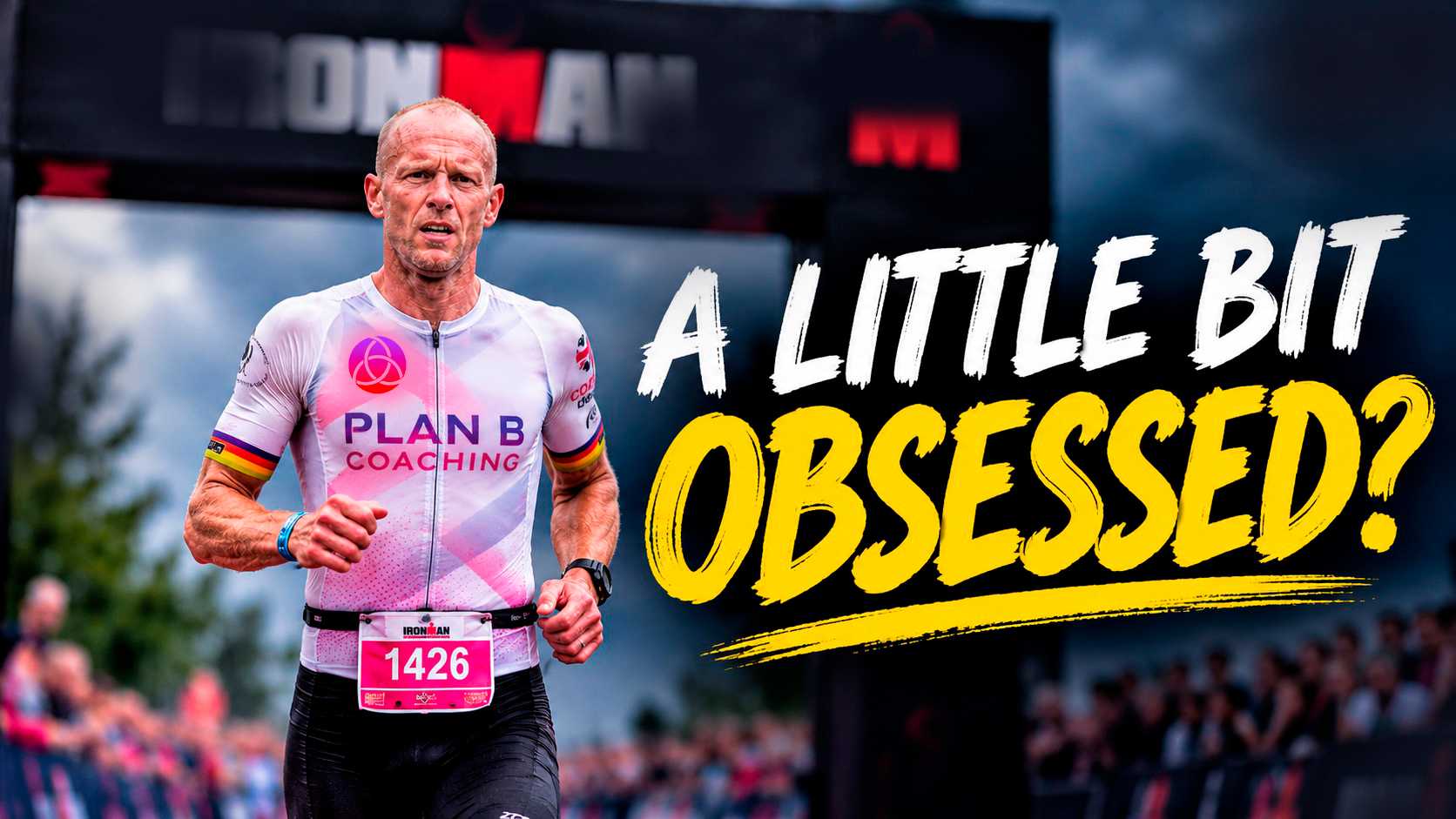
There is something slightly different about people who choose to spend hours swimming, cycling and running. While most people are quite happy to finish work, put their feet up and enjoy a relaxing evening, endurance athletes are often planning their next training session, checking their training data or wondering how they can squeeze another hour on the bike into an already busy week.
To the outside world, it can look a little obsessive. Perhaps even ridiculous.
Why would anyone willingly get up at 5am to ride a bike in the freezing cold? Why spend hours running along the same roads, pushing through discomfort when there is absolutely no requirement to do so? And why would anyone sign up for an Ironman, knowing full well that they are going to spend most of the day exhausted, uncomfortable and questioning their life choices?
Perhaps the answer lies in the personality of the people attracted to these sports.
There is a certain type of individual who thrives on endurance challenges. They are often determined, driven, obsessive and sometimes just a little bit addicted to the process.
But what is it about these personalities that makes them so successful over long distances?
One of the biggest challenges in endurance sport isn’t necessarily physical ability. It is commitment.
Anyone can get excited about signing up for an event. The initial enthusiasm is usually easy to find. A new pair of running shoes, a shiny new bike or the thought of crossing an Ironman finish line can provide all the motivation we need.
The difficult part comes several weeks or months later.
It’s dark outside. It’s raining. You’re tired from work, your legs are heavy and the last thing you want to do is head out for another training session.
This is where the obsessive personality can have an advantage.
People who become deeply invested in something often find it difficult to switch off. They don’t simply train when they feel motivated. Training becomes part of their identity and daily routine.
They think about it constantly. They plan around it. They organise their lives to accommodate it.
For many endurance athletes, missing a training session can feel worse than completing a difficult one.
That level of commitment can be incredibly powerful when preparing for long-distance events. Success in triathlon rarely comes from one spectacular workout. It comes from hundreds of relatively ordinary sessions completed consistently over time.
The ability to keep showing up, even when enthusiasm disappears, is one of the most valuable characteristics an endurance athlete can possess.
Endurance sport is essentially a long exercise in managing discomfort.
There will always be moments when your body wants to stop. Your legs hurt, your breathing becomes difficult and your mind starts looking for reasons to slow down.
For some people, this is enough to make them question why they started in the first place.
For others, it becomes part of the attraction.
Many endurance athletes develop an unusual relationship with discomfort. They learn that feeling uncomfortable doesn’t necessarily mean something is wrong. Sometimes it simply means they are working hard.
This doesn’t mean ignoring pain or training through injury. Understanding the difference between productive training discomfort and potentially harmful pain is an important part of becoming a successful athlete.
However, the ability to remain calm and focused when things become difficult is a huge advantage.
Think about the final 10 kilometres of a marathon or the final 30 kilometres of an Ironman bike course.
At that point, the excitement of the start line has disappeared. The crowds may have thinned out, your energy levels are dropping and the finish line still feels a long way away.
This is where mental resilience becomes just as important as physical fitness.
Athletes who have learned to embrace difficult situations rather than immediately trying to escape them often have an advantage.
They understand that discomfort is temporary and that progress sometimes requires patience.
One of the most rewarding aspects of endurance sport is seeing improvement.
Your first 5km run might feel impossible. A few months later, you can run 10km comfortably.
Your first 100km bike ride might leave you exhausted. Eventually, 100km becomes a normal weekend training session.
Your swimming technique improves, your cycling power increases and your running pace becomes quicker.
These improvements provide a powerful psychological reward.
Every new personal best, completed training block or successful race gives you another reason to keep going.
For some athletes, this feeling becomes addictive.
They start chasing the next milestone before they have even celebrated the previous one.
A faster 5km. A bigger FTP. A quicker half marathon. A sub-12-hour Ironman.
There is always another target.
This constant desire to improve can be extremely useful in endurance sports because progress is rarely immediate. It requires patience, consistency and a willingness to work towards something that might be months or even years away.
The important thing is learning to enjoy the process rather than becoming completely dependent on the next personal best.
After all, if you only enjoy training when you’re improving, you’re going to have some difficult days.
Endurance athletes can be remarkably obsessive about the smallest details.
Power numbers, heart rate, cadence, pace, nutrition, hydration, sleep scores and training load can all become subjects of intense interest.
A cyclist might spend an evening analysing a 90-minute training session, examining every power fluctuation and wondering why their heart rate was three beats higher than expected.
A triathlete might spend hours researching the best race-day nutrition strategy or comparing the aerodynamic advantages of different helmet designs.
To a non-athlete, this can seem completely unnecessary.
But there is a reason why attention to detail matters.
Long-distance racing is about much more than simply being fit. It involves managing hundreds of small decisions over an extended period.
Pacing, fuelling, hydration, equipment choices and race preparation can all have a significant impact on performance.
The athlete who understands these details and takes the time to get them right can gain a considerable advantage.
However, there is a fine line between being detail-oriented and becoming obsessed with numbers.
Data should help you understand your training, not become something that controls every decision you make.
Sometimes the best training session is the one where you stop looking at your watch and simply enjoy the ride.
Some people are perfectly happy without a particular goal. They exercise because it makes them feel good, keeps them healthy and provides an opportunity to socialise.
There is absolutely nothing wrong with that.
However, many endurance athletes need something bigger.
They need a challenge.
A race date in the calendar gives their training purpose. It creates structure and provides a reason to get out of bed when motivation is low.
The bigger the challenge, the more invested they become.
This is one reason why Ironman racing attracts such a particular type of personality.
The distance is intimidating. The preparation is demanding and the commitment required is significant.
But that is precisely the attraction.
Completing something that once seemed impossible provides an enormous sense of achievement.
For some athletes, the event itself is almost secondary. The real reward is knowing that they have spent six, nine or twelve months working towards something that demanded commitment, sacrifice and determination.
They don’t just want to complete a challenge. They want to prove to themselves that they can.
Endurance training is built around routine.
Swim on Monday, intervals on Tuesday, an easy run on Wednesday, cycling on Thursday and a long session at the weekend.
The exact schedule will vary, but the principle remains the same.
Successful athletes develop habits that allow training to become part of everyday life.
This is particularly important because endurance training involves a considerable amount of repetition.
There is no secret workout that suddenly transforms an average athlete into an Ironman champion.
Instead, improvement comes from repeatedly applying the right training stimulus, allowing the body to recover and gradually building fitness.
Athletes with obsessive tendencies often enjoy this structure.
They like knowing what they need to do, when they need to do it and what they are trying to achieve.
They become comfortable with repetition and understand that the seemingly unremarkable sessions are often the ones that make the biggest difference.
But routine should never become a prison.
Life happens. Work commitments change, families need attention and sometimes the body simply needs a rest.
The best endurance athletes understand that consistency is important, but flexibility is essential.
Failure is an unavoidable part of endurance sport.
You will have bad races, missed training sessions, disappointing performances and days when nothing seems to go right.
You might miss a qualifying time, struggle with nutrition or discover that your carefully planned race strategy has fallen apart by halfway.
For some people, these experiences are enough to put them off returning.
For the more obsessive endurance athlete, they often become another reason to come back.
They want to understand what went wrong.
Was the pacing too aggressive? Was the training insufficient? Was nutrition poorly planned? Did they simply have a bad day?
Rather than accepting failure as the end of the journey, they see it as information.
This ability to reflect, learn and try again is incredibly valuable.
There is also something quite remarkable about the endurance athlete’s relationship with disappointment.
They can spend months preparing for an event, have everything go wrong on race day and still find themselves planning their next attempt a few days later.
Perhaps that is madness.
Or perhaps it is resilience.
Either way, the ability to get back up and try again is one of the defining characteristics of successful endurance athletes.
One of the biggest misconceptions about endurance athletes is that they are only interested in the finish line.
Of course, crossing the finish line is important. The atmosphere, the achievement and the sense of relief can be unforgettable.
But ask an experienced Ironman athlete about their favourite part of the journey and you might be surprised by the answer.
It might be the early morning rides, the long Sunday runs, the training camps or the friendships developed along the way.
For many athletes, training becomes something they genuinely enjoy.
The process provides structure, purpose and an opportunity to switch off from the pressures of everyday life.
It can become a form of therapy.
An hour on the bike allows you to forget about work. A long run gives you time to think. Swimming provides a welcome escape from the noise of everyday life.
The physical benefits are obvious, but the psychological benefits can be just as significant.
The danger comes when training stops being enjoyable and becomes something you feel compelled to do regardless of the consequences.
There is a difference between being passionate about endurance sport and allowing it to take over your life.
Recognising that difference is important.
Most people measure time in hours and minutes.
Endurance athletes often measure it in training opportunities.
A spare hour becomes a short run. A gap in the working day becomes a swim. A free Saturday morning becomes a three-hour bike ride.
They become incredibly efficient at finding opportunities to train.
This ability to organise their lives around a long-term goal is another reason why they can be successful.
Long-distance events require patience. You cannot rush the process, and attempting to do too much too soon is one of the quickest ways to become injured or exhausted.
Athletes who can commit to months of preparation without needing immediate rewards are often better equipped for endurance challenges.
They understand that today’s easy session might contribute to a personal best six months later.
That requires a different mindset.
It is about trusting the process and accepting that meaningful progress takes time.
There is an important distinction between having an obsessive personality and having an unhealthy relationship with exercise.
The same determination that helps an athlete complete an Ironman can sometimes become their biggest obstacle.
Training when injured, ignoring fatigue, feeling guilty about rest days or allowing sport to negatively affect relationships and everyday responsibilities are all warning signs.
More training does not automatically mean better performance.
In fact, one of the biggest lessons in endurance sport is learning when not to train.
Fitness develops through the combination of training stress and recovery. Without adequate recovery, the body cannot adapt properly.
Athletes who constantly push themselves without allowing sufficient recovery risk overtraining, illness, injury and burnout.
This is where good coaching becomes particularly valuable.
An athlete with an obsessive personality might always want to do more. A coach can provide the perspective needed to understand when doing less is actually the smarter option.
Sometimes the hardest session of the week is not the interval workout.
It is the rest day.
Learning to accept that recovery is part of the training process is a skill every serious endurance athlete needs to develop.
Perhaps.
There is certainly something addictive about setting yourself a seemingly impossible goal and gradually working towards achieving it.
There is something addictive about seeing your fitness improve, completing difficult sessions and discovering that your body can do things you once thought were beyond your capabilities.
And there is something incredibly rewarding about standing on a start line knowing exactly how much work has gone into getting there.
But perhaps the word addiction is slightly unfair.
What we are really describing is passion, commitment, discipline, curiosity and a willingness to keep pushing boundaries.
The most successful endurance athletes are not necessarily the most talented. They are often the ones who can combine these personality traits with patience, intelligent training and an understanding of their own limitations.
They know when to push and when to hold back.
They understand that consistency beats occasional heroics and that recovery is just as important as hard work.
Most importantly, they enjoy the journey.
If you recognise yourself in any of these descriptions, there is a good chance that endurance sport has become more than just a hobby.
Perhaps you spend too much time looking at training data. Perhaps your holidays are planned around races, or you find yourself thinking about your next event before you’ve even recovered from the last one.
Maybe your friends and family have stopped asking what you’re doing at the weekend because they already know the answer.
That obsessive streak might be exactly what makes you suited to long-distance sport.
But remember that being a successful endurance athlete isn’t about training harder than everyone else, doing the most sessions or spending every available hour exercising.
It is about making the right decisions, consistently, over a long period of time.
At Plan B Coaching, we believe that great endurance performance comes from smart, structured and sustainable training.
Your ambition should never come at the expense of your health, family or enjoyment of the sport.
Whether you’re preparing for your first sprint triathlon, chasing a personal best or working towards an Ironman finish line, the principles remain the same.
Be committed. Be consistent. Embrace the challenge. Learn to enjoy the difficult days and understand the importance of the easy ones.
And perhaps most importantly, remember why you started.
Because there is nothing quite like discovering what you’re capable of when you give yourself a goal, commit to the process and refuse to give up.
You might have to be a little bit obsessed to succeed in long-distance sport. Just make sure you’re obsessed with getting better, not simply doing more.
Plan B Coaching – helping athletes train smarter, perform better and achieve more without needing a second mortgage.
Copyright © PlanB Coaching