support{at}planbcoaching.co.uk


PlanB Coaching > Blog > Uncategorized > Winter Triathlon Training for Age Group Athletes | Plan B Coaching

Making the most of the off-season, building a stronger foundation and preparing for your best triathlon season yet.
For many age group triathletes, winter can be a strange time of year. The excitement of race season has faded, the big events are behind you, and the temptation to put your feet up and enjoy a few months away from structured training can be hard to resist.
And quite honestly, there is nothing wrong with taking a well-earned break.
However, winter is also one of the most important periods in your triathlon calendar. While other athletes might be switching off completely, the work you put in during these colder, darker months can have a significant impact on how you perform when race season comes around again.
But here is the important part: winter training shouldn’t simply mean doing more. It should mean training smarter.
For the age group triathlete, this is particularly important. Unlike professional athletes, most of us don’t have the luxury of spending several hours a day training. We have jobs, families, social commitments and plenty of other responsibilities competing for our time.
The challenge is finding a training approach that allows you to improve as an athlete without allowing triathlon to take over your life.
At Plan B Coaching, we believe winter is about building the foundations for the season ahead, addressing weaknesses, developing consistency and making sure you arrive at your next race block in the best possible position.
So, what should winter training actually look like for an age group triathlete?
Let’s take a look.
Before jumping straight into another training programme, take some time to reflect on the season you’ve just completed.
What went well? What didn’t go quite to plan? Where did you make improvements, and where did you struggle?
It is easy to get caught up in looking at finishing times, age group positions and personal bests. However, there is often much more to learn from looking beyond the final result.
Consider each discipline individually.
Swimming
Did you improve your technique throughout the season?
Were you comfortable swimming in open water?
Did you struggle to maintain your pace over longer distances?
Was your swim costing you too much energy before getting onto the bike?
Cycling
Did your FTP improve?
Could you maintain your target power over your race distance?
Did you struggle with hills, sustained efforts or changes in pace?
Were you able to run comfortably off the bike?
Running
Did your running performance match your expectations?
Could you maintain your planned race pace?
Did you struggle with fatigue during longer sessions?
Were injuries or niggles interrupting your training?
Also consider the less obvious factors.
Did you consistently complete your sessions? Were you getting enough recovery? Did your training fit around your working life, or were you constantly trying to squeeze sessions into an already busy schedule?
Understanding these things gives you a starting point for the winter.
There is little value in simply repeating last year’s training programme if it hasn’t addressed the areas that need improvement.
One of the biggest mistakes age group triathletes make during winter is trying to do too much, too soon.
There is often an urge to come out of the off-season firing on all cylinders. Athletes start chasing FTP improvements, adding extra running mileage and pushing harder in every session.
The problem is that fitness takes time to develop.
Winter is a long-term investment, not a competition in itself.
Rather than chasing impressive training numbers, focus on establishing a consistent routine that you can maintain week after week.
Consistency is one of the biggest predictors of long-term improvement in triathlon.
Think about completing three or four months of sensible, progressive training rather than having two fantastic weeks followed by a period of exhaustion, illness or injury.
For an age group athlete, this means finding a realistic balance.
If you have six hours available to train each week, build your programme around those six hours. Don’t create a twelve-hour programme and hope that somehow you will find the extra time.
A training plan should complement your life, not compete with it.
At Plan B Coaching, we believe in the minimum effective dose of training. That means identifying the work required to improve your performance and delivering it in a way that makes the best use of the time available.
You don’t need heroic training weeks throughout the winter to become a better triathlete.
You need consistency, purpose and progression.
Winter is an excellent opportunity to develop your aerobic fitness.
Throughout the racing season, training often becomes more specific. There are race-pace sessions, threshold efforts, VO2 intervals and longer sessions designed to prepare you for the demands of your chosen event.
During winter, there is generally more opportunity to spend time developing your aerobic foundation.
This doesn’t mean every session needs to be slow, nor does it mean avoiding intensity completely.
Instead, the emphasis should shift towards controlled aerobic work, particularly in swimming, cycling and running.
For cycling, this might involve longer Zone 2 sessions, steady endurance work and some controlled tempo efforts.
For running, it could mean comfortable aerobic runs, gradually developing your ability to maintain an efficient pace without accumulating excessive fatigue.
Swimming can include longer aerobic sets, focusing on maintaining good technique as fatigue develops.
The objective is to improve your ability to sustain exercise efficiently.
A stronger aerobic foundation can help you:
Maintain a higher percentage of your maximum effort for longer.
Improve endurance across all three disciplines.
Recover more effectively between harder training sessions.
Develop greater resistance to fatigue.
Prepare your body for the more demanding sessions later in the season.
Remember, aerobic development is not about making every session as long as possible.
It is about accumulating appropriate training volume consistently, without compromising recovery or the quality of your other sessions.
Winter is arguably one of the best opportunities to improve your swimming.
During the racing season, there can be a tendency to focus heavily on maintaining fitness and preparing for open-water events. However, swimming technique is something that deserves dedicated attention throughout the year.
The pool provides a controlled environment where you can work on specific technical weaknesses without the distractions of open water.
For many age group triathletes, swimming is the discipline where relatively small technical improvements can produce significant benefits.
Consider how much energy you can waste fighting against the water.
An inefficient stroke, poor body position or excessive kick can all increase the effort required to maintain a given pace.
Winter provides an opportunity to work on:
Body position: Developing a more horizontal position in the water and reducing unnecessary drag.
Catch and pull: Improving how effectively you connect with and move water during each stroke.
Rotation: Developing appropriate body rotation to support an efficient stroke.
Breathing: Becoming more comfortable and relaxed with your breathing pattern.
Stroke efficiency: Learning to maintain speed without unnecessarily increasing effort.
Don’t become obsessed with swimming faster every session.
Sometimes the biggest improvement comes from swimming the same pace with fewer strokes and less effort.
A useful winter swimming programme should include a mixture of technique drills, aerobic swimming and some controlled faster efforts.
If swimming is a weakness, this is the time to address it rather than waiting until six weeks before your first race.
For many age group triathletes, winter cycling provides an excellent opportunity to develop strength and improve power.
The turbo trainer becomes a regular feature of life, particularly when the weather makes outdoor riding less appealing.
Although indoor cycling might not have the scenery of a summer ride, it does offer some significant advantages.
You can control your power, manage your cadence, remove interruptions and complete highly structured sessions in a relatively short period.
This makes it particularly useful for athletes balancing training with full-time employment.
Winter cycling can focus on several key areas.
Aerobic endurance
Longer, steady efforts help develop your aerobic engine and improve your ability to sustain power over time.
Sweetspot training
Sweetspot work, generally performed around 87–94% of FTP, offers a useful balance between training stimulus and fatigue. It can help develop sustainable cycling power without requiring the recovery associated with repeated maximal efforts.
FTP development
As winter progresses, appropriately structured threshold sessions can help improve your ability to sustain higher power outputs.
Cadence and muscular coordination
Experimenting with different cadences can improve your ability to produce power efficiently across different riding conditions.
For example, alternating between higher-cadence sweetspot work and lower-cadence threshold efforts can introduce variety while developing different aspects of cycling performance.
However, don’t fall into the trap of making every turbo session a hard session.
A well-balanced winter programme should include plenty of controlled endurance riding alongside targeted quality work.
The objective is to arrive at spring with a stronger, more efficient engine, not to arrive exhausted.
Running is often the discipline that requires the most careful management during winter.
Unlike cycling and swimming, running places considerably more impact stress on the body.
It is easy to become enthusiastic about increasing mileage, adding intervals and chasing faster training paces. Unfortunately, this can also be a recipe for injury.
Winter is a good time to develop running durability, but progression needs to be sensible.
For most age group triathletes, this means prioritising regular running, developing aerobic fitness and gradually improving your ability to tolerate training volume.
Rather than trying to smash personal bests in every session, consider including:
Easy aerobic runs to develop endurance.
Controlled tempo efforts to improve sustainable running pace.
Shorter intervals to maintain speed and running economy.
Hill repetitions to develop strength and improve running mechanics.
Gradually progressive longer runs.
One particularly important consideration is the relationship between running and cycling.
You might have an excellent FTP and be capable of producing impressive numbers on the bike, but that doesn’t necessarily mean you will run well afterwards.
Triathlon running requires the ability to run efficiently on tired legs.
Winter is an opportunity to develop the underlying running fitness that will support your race-specific brick sessions later in the year.
However, there is no need to turn every weekend into a long bike followed by a long run.
Save some of that race-specific work for when it becomes more relevant.
If there is one area that many triathletes could benefit from including more consistently, it is strength training.
Swimming, cycling and running are repetitive movements. Although they develop sport-specific fitness, they don’t necessarily provide all the strength and movement capacity required to support a resilient athlete.
Winter offers an excellent opportunity to introduce or develop a structured strength programme.
Strength training can support:
Muscular strength and endurance.
Improved movement control.
Running stability and mechanics.
Cycling force production.
General physical resilience.
The ability to tolerate training demands.
You don’t need to spend hours in the gym.
Two well-structured strength sessions per week can be a useful starting point, depending on your training history and overall workload.
Exercises worth considering include:
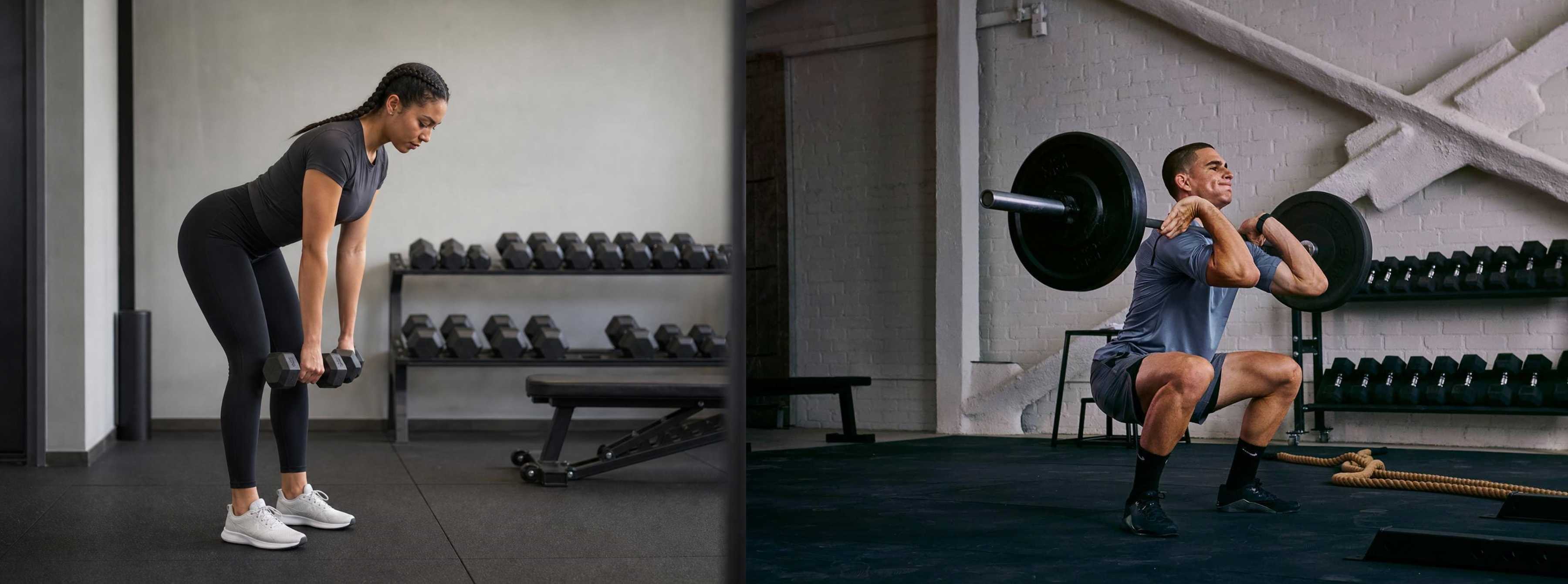
Squats and split squats.
Romanian deadlifts.
Single-leg exercises.
Calf raises.
Glute bridges and hip thrusts.
Core stability exercises.
Upper-body pulling and pushing movements.
The emphasis should be on good technique, controlled movement and progressive overload.
If you are relatively new to strength training, start with manageable loads and build gradually.
It is also important to remember that strength training creates additional fatigue. It needs to be incorporated into your programme rather than simply added on top of everything else.
The goal is to become a stronger triathlete, not just someone who does more training.
This might sound contradictory in an article about winter training, but recovery is just as important as the work itself.
After a long season of training and racing, your body and mind may need some time away from structured training.
That doesn’t mean you need to stop exercising completely.
It might mean taking a week or two away from your usual routine, enjoying some walks, getting out on the bike without worrying about power numbers or swimming without having a specific session to complete.
There is nothing wrong with enjoying exercise for the sake of it.
In fact, stepping away from the constant pressure of training targets can help restore motivation.
Remember that fitness isn’t built exclusively during training sessions. Adaptation happens when your body has sufficient opportunity to recover from the work you’ve completed.
Pay attention to sleep, nutrition, stress and general wellbeing.
For age group athletes, these factors are particularly important because the demands of everyday life can have a significant impact on recovery.
A difficult week at work, poor sleep or family commitments might mean adjusting your training.
That isn’t failure.
It is part of managing your training intelligently.
One of the biggest advantages of the off-season is having the time to address areas that might have been neglected during race preparation.
During the summer, training often becomes focused on maintaining fitness and preparing for specific events.
Winter gives you the opportunity to step back and work on the things that could make the biggest difference to your performance.
Perhaps your swimming is holding you back.
Maybe you struggle to maintain power on longer climbs.
Perhaps your running pace drops significantly after the halfway point of an event.
Or maybe you simply haven’t developed the strength and mobility required to train consistently.
Whatever the issue, winter is the time to start addressing it.
However, be realistic.
You don’t need to transform every weakness into a strength in three months.
Identify one or two priorities and give them the attention they deserve.
For example, if swimming is your biggest weakness, you might increase your swimming frequency while maintaining your cycling and running fitness.
If running durability is an issue, you might focus on consistent, controlled running and strength work rather than increasing your cycling volume.
A good training programme should reflect the individual athlete, not simply follow a generic formula.
Although winter training should primarily focus on building foundations, it is worth keeping your longer-term objectives in mind.
What events are you targeting next season?
Are you preparing for a sprint, Olympic distance, 70.3 or full-distance Ironman?
The demands of each event are different, and your winter preparation should reflect that.
For example, an athlete preparing for a full-distance Ironman will have different endurance requirements to someone targeting a sprint-distance event.
However, there is no need to start doing full race-distance sessions in December.
Instead, use winter to develop the general fitness and physical capabilities that will allow you to handle more specific training later.
As spring approaches, your programme can gradually introduce more race-specific sessions.
These might include:
Longer rides at controlled race intensity.
Brick sessions combining cycling and running.
Sustained race-pace efforts in the pool.
Longer running sessions.
Nutrition and hydration practice.
Transitions and race-day preparation.
The important thing is that your training progresses logically.
There should be a reason behind the sessions you complete, and each phase should prepare you for what comes next.
There is no single perfect winter training week.
Your available time, experience, target events and individual strengths will all influence what your programme should look like.
However, for an age group triathlete with approximately 8–10 hours available each week, a balanced winter programme might look something like this:
| Day | Session | Focus |
|---|---|---|
| Monday | Rest | Recovery |
| Tuesday | Swim + Turbo | Technique and sweetspot |
| Wednesday | Run + Strength | Aerobic running and strength |
| Thursday | Swim + Turbo | Aerobic swim and endurance cycling |
| Friday | Rest or easy recovery | Recovery |
| Saturday | Long bike + short brick run | Aerobic endurance |
| Sunday | Run + Swim | Endurance and technique |
Illustrative example only. Session duration and intensity should be adjusted to your experience, recovery and available training time.
Notice that there are no huge training days or constant high-intensity efforts.
The week includes all three disciplines, strength work, recovery and a combination of aerobic and more focused sessions.
It is designed to be repeatable.
That is an important consideration.
A training week that looks impressive on paper but cannot be consistently completed is unlikely to deliver the results you want.
It is much better to complete a sensible programme week after week than continually struggle to fit an unrealistic one into your life.
Perhaps the biggest mistake triathletes make is treating winter as another competition.
There can be a temptation to compare turbo trainer numbers, weekly mileage, training hours and Strava segments.
Social media doesn’t always help.
It is easy to see other athletes posting huge training weeks and feel that you should be doing the same.
But remember, you have no idea what their circumstances are.
You don’t know their working hours, family commitments, training history or recovery requirements.
You also don’t know whether the training they are completing is appropriate for them.
Your winter training should be about your development, not somebody else’s.
If you finish winter fitter, stronger, healthier and more motivated than when you started, that is a successful off-season.
You don’t need to set a new FTP record in January or run your fastest 10km in February.
Those performances will come when the time is right, provided the foundations have been developed properly.
Winter is one of the most valuable periods in a triathlete’s training calendar.
It provides an opportunity to step away from the pressures of racing, assess your performance, address weaknesses and build the foundations for the season ahead.
But it doesn’t need to be complicated.
Focus on consistency. Develop your aerobic fitness. Improve your swimming technique. Build cycling strength and endurance. Develop running durability and include some sensible strength training.
Most importantly, make sure your training fits around your life.
As an age group triathlete, you are balancing far more than three sports. You have a job, family, responsibilities and commitments that all deserve attention.
Your training programme needs to recognise that.
At Plan B Coaching, we believe that better performance doesn’t necessarily come from doing more. It comes from understanding what you need to do, why you are doing it and how to get the best possible results from the time available.
There is no requirement to spend every winter weekend completing enormous training sessions or to fill every spare hour with exercise.
The objective is to build a stronger, more capable athlete through consistent, progressive and purposeful training.
Get the winter right and you give yourself a fantastic platform for the months ahead.
And when that first race of the season arrives, you want to be standing on the start line feeling prepared, confident and ready to enjoy everything you have worked towards.
Train smart. Stay consistent. Make every session count.
Plan B Coaching – helping age group triathletes achieve more without needing a second mortgage or sacrificing everything else in life.
Copyright © PlanB Coaching