support{at}planbcoaching.co.uk


PlanB Coaching > Blog > Uncategorized > Fancy a sub six hour half Ironman? Here’s your plan for hitting your target!
Here at PlanB Coaching, we believe in working smarter, not just harder and you’re a 70.3 triathlete with a goal. A big one. You’re no longer just looking to finish. you’re looking to race. You’ve got your sights set on that elusive, magical benchmark: the sub-6-hour half Ironman. It’s the dividing line between a solid finish and a truly outstanding performance for an age grouper. It means you’re fit, you’re fast, and perhaps most importantly, you are a master of your own race.
But the path to that six hour finish isn’t just about racking up the miles. It’s about smart pacing, meticulous nutrition, and executing a training plan designed specifically for this ambitious goal . This isn’t a plan for beginners, it’s for athletes who understand that the fourth discipline—nutrition—and the ability to manage your effort are just as crucial as your swim, bike, and run fitness .
That’s why we’ve put together a high level overview of what it takes to flirt with the six-hour mark. And if you like what you see, we’re offering a free, comprehensive sub 6 hour training plan on our website to get you started on the right foot.
Breaking six hours in a 70.3 is a game of margins. You need a holistic approach. Here are the key pillars you must focus on:
1. Race Pacing: The Art of the “Comfortably Hard” Effort
This is the most common mistake. Athletes get caught up in the race day adrenaline and go out too hard on the swim and bike, only to suffer a catastrophic collapse on the run. For a sub 6 hour finish, your pacing must be surgical.
Swim: Your swim target for a sub-6-hour race is around 35-40 minutes. The goal is not to break a record; it’s to exit the water feeling fresh and ready to ride. Focus on a smooth, economical stroke.
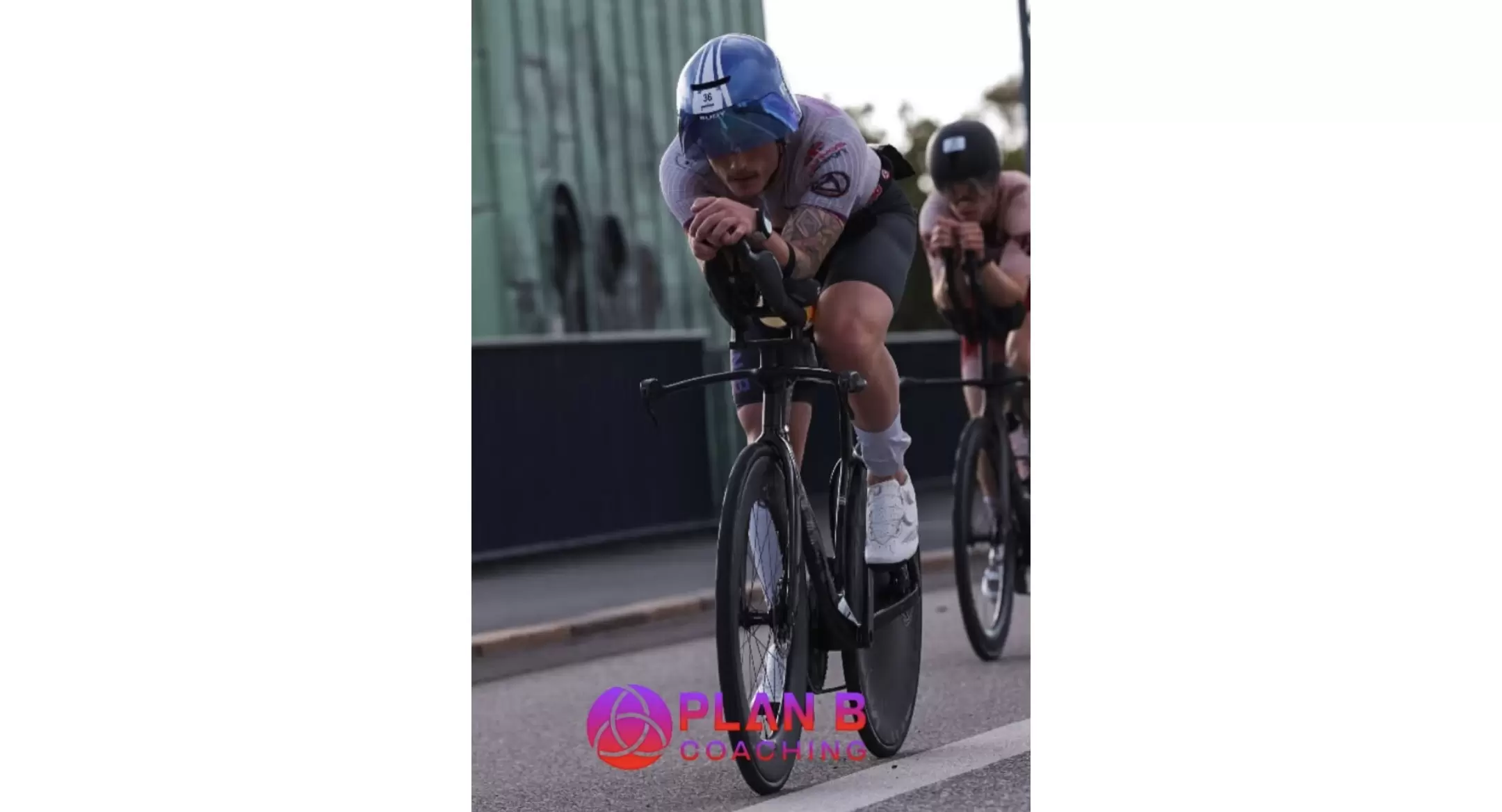
Bike: This is where the race is truly won or lost. Your bike split should be in the 2:45-2:55 range (averaging roughly 18-19 mph). To achieve this without blowing up, you need to ride at a controlled pace. A good rule of thumb is to target 75-82% of your Functional Threshold Power (FTP) . The golden rule here? If it feels a little too easy on the bike, you’re doing it right. Trust the process, and save your legs for the run.
Run: After a controlled bike, you should be able to run a strong half marathon in the 1:40-1:45 range (around 7:45-8:00/mile pace). It’s a common mistake for athletes to start the run too fast. The key is a negative or even split, settling into a rhythm and holding on.
2. Nutrition is Your Fourth Discipline
You can be the fittest athlete out there, but if you don’t fuel correctly, you will hit the wall. The sub-6-hour race requires a robust and practiced nutrition strategy.
On the Bike: Aim for 60-90 grams of carbohydrates per hour. A simple strategy is a mix of sports drink (at a 6-8% concentration) and a gel every 30 minutes . Start your nutrition intake within the first 10 minutes of the bike and set your watch to beep every 15 minutes as a reminder to drink and eat .
On the Run: Your heart rate is typically higher on the run, making digestion more difficult. You should aim for 40-60 grams of carbohydrates per hour . Many find liquid calories (like sports drink or cola) easier to digest than gels. If using gels, take them with water at aid stations.
Hydration: Fluid loss is a huge factor. Plan to consume 24-50 ounces of fluid per hour on the bike, adjusting for the weather and your sweat rate . Practice your exact race-day nutrition plan in your key training sessions to avoid any gastrointestinal surprises on race day .
3. Strategic Training: Consistency Over Volume
A sub-6-hour finish demands a high level of fitness, which comes from consistent, purposeful training. While volume is important, the quality of your key sessions is paramount.
Weekly Schedule: Expect to train 5-6 days a week, including double sessions (e.g., a morning swim and an afternoon bike/run), with total weekly volume typically ranging from 8 to 14 hours .
Key Sessions:
Pace Work: A cornerstone of your plan. This involves training at or slightly faster than your goal race pace. Practicing pace work during fatigue is the best way to build the physical and mental skills you’ll need on race day .
Brick Workouts: Running off the bike is a unique sensation. Perform at least one brick session per week. A classic session is a 90-minute bike followed immediately by a 30-minute run at race pace .
Long Rides & Runs: You need to build endurance. Your long rides will peak at around 3 hours or more, and your long runs should get you up to 12-15 miles .
Open-Water Skills: Don’t just swim in a pool. Practice sighting, drafting, and swimming in groups to be comfortable in the chaos of the race start .
The journey to a sub-6-hour 70.3 is a challenging one, but it is absolutely achievable with the right structure and guidance. This blog has given you the blueprint, but now it’s time to build the house.
At PlanB Coaching, we help athletes just like you reach their potential. Our coaching is built on a data driven, adaptive approach that fits around your life. We believe that a smart, balanced plan is the secret to smashing your goals without burning out .
Are you ready to turn this ambition into a reality?
Head over to www.planbcoaching.co.uk right now to download your FREE, comprehensive training plan designed specifically for the sub-6-hour 70.3.
This isn’t just a list of workouts. It’s a complete guide to help you pace, fuel, and train with purpose. Let’s get you to that finish line.
Good luck, and train smart!

Copyright © PlanB Coaching